Walk into the Jewish Quarter of the Old City and you will not see these synagogues from the street. You have to go down to reach them - down a flight of steps, below the level of the lane outside, into a cluster of four connected stone halls that together form the historic centre of Sephardic worship in Jerusalem. The site is not a ruin and not a museum piece behind glass. It is a working complex: four synagogues under one roof, called simply the Four Sephardic Synagogues, still used for prayer, still standing exactly where they were built, and still, structurally, telling you something about the world that made them.
That something is written into the architecture itself. The floor of the complex sits noticeably below the surrounding street. This was not a design preference. Under Ottoman rule, non-Muslim houses of worship were restricted from rising higher than the mosques around them, and Jerusalem's Jewish community, building within the tight confines of the Old City, answered the restriction the only way available: it dug down rather than up. Sink the floor and you gain interior height without breaking the skyline. The result is four low-profile buildings from the outside and four soaring, vaulted rooms once you are inside them - a piece of legal compromise you can still walk into today.
Four halls, one sunken floor
The complex comprises the Yohanan ben Zakkai Synagogue, the Central (Emtsai) Synagogue, the Eliyahu Hanavi (Elijah the Prophet) Synagogue and the Istanbuli Synagogue, arranged around and connected to one another in the heart of the Jewish Quarter. Yohanan ben Zakkai is generally treated as the oldest and largest of the four, with the others added or adapted around it as the community's needs grew. All four sit below the level of the surrounding streets, their vaulted ceilings and domes rising to give the sunken halls a sense of height that their low exterior profile does not reveal.
Jewish Quarter, Old City of Jerusalem - in situWhat the site shows
Local tradition attaches stories to the halls that are worth repeating as story, not as proof. The Eliyahu Hanavi Synagogue takes its name from an account, told and retold in the community, of a Yom Kippur when a minyan was one man short and a mysterious stranger appeared to complete it, later understood to have been Elijah the Prophet himself. Other traditions link the complex to a much older sacred memory of the site and to teachers who are said to have prayed within its walls. None of that legend is what the stones themselves can confirm. What the stones confirm is plainer and, in its way, sturdier: a functioning Sephardic communal prayer complex standing on this spot, continuously identifiable, through the Ottoman centuries and into the present.
The complex is also physical evidence of continuous Jewish presence and communal organisation in Jerusalem across a period usually remembered, if at all, through travellers' accounts and archival records rather than surviving buildings. A synagogue complex of this size, built under real legal constraint and maintained across centuries, argues for a settled, resourced community rather than a scattered handful of individuals. The architecture is the record of that community's continuity as much as any document naming it would be.
Lost for nineteen years, then restored
During the 1948 war, Jordanian forces took the Jewish Quarter and the synagogues within it were damaged and their contents looted or destroyed, along with many other synagogues in the Quarter. For nineteen years Jews had no access to the site. After the Old City came back under Israeli control in the 1967 Six-Day War, the Jewish Quarter was rebuilt and the Four Sephardic Synagogues were restored and reopened for worship, a physical recovery that mirrors the return of Jewish life to the Old City more broadly.
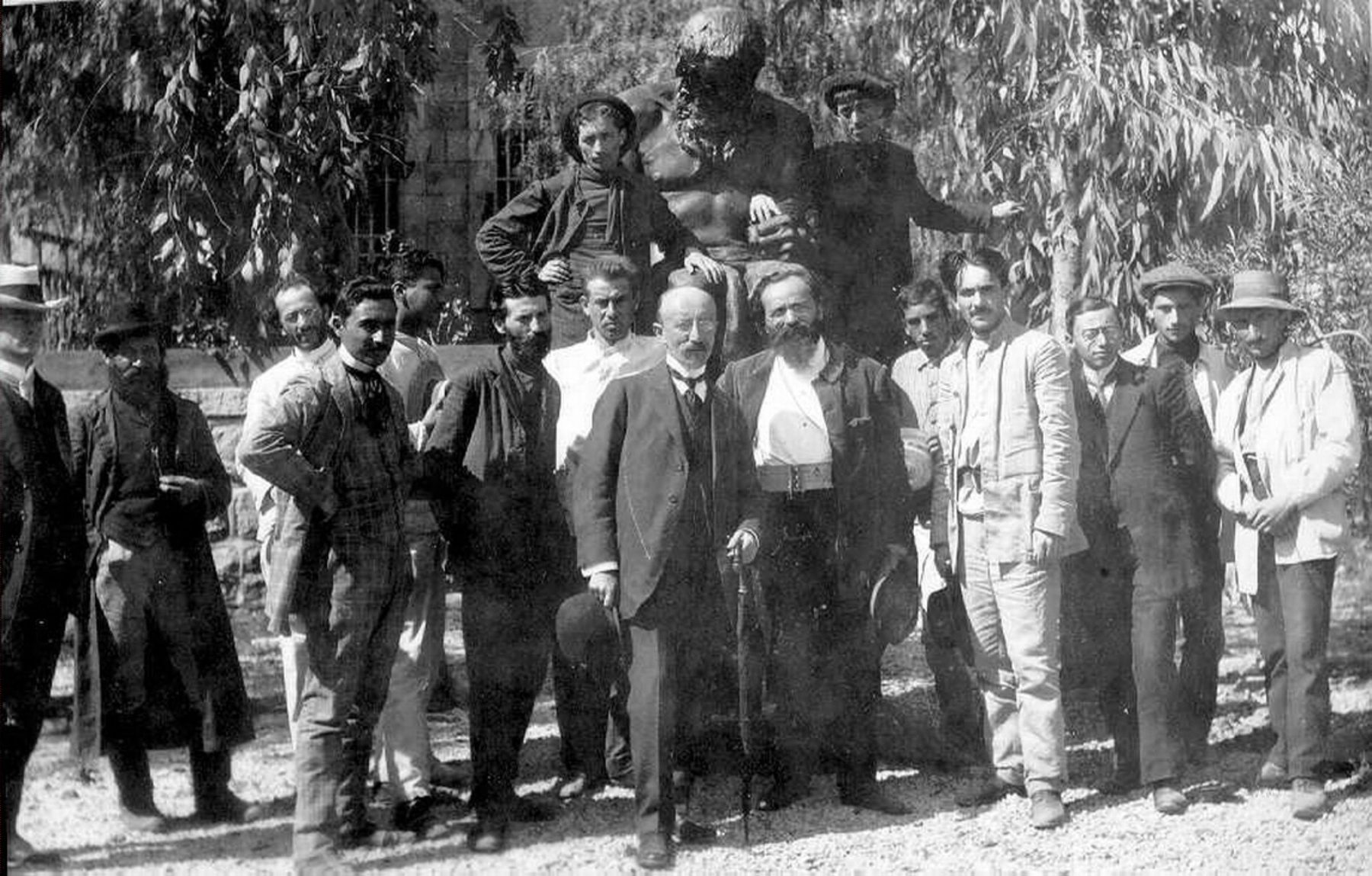
Jewish Quarter reconstruction, JerusalemNone of this rests on a single inscription or a single artefact. It rests on the building itself, standing where it has always stood, sunk below the street it was never allowed to rise above, damaged once and rebuilt, and used for its original purpose today by a congregation that traces its line back to the community that first dug the floor down. That is a modest kind of evidence compared with a dated tablet or a named seal, but it is checkable in the most direct way there is: you can go there, go down the steps, and stand in the room.
Further reading