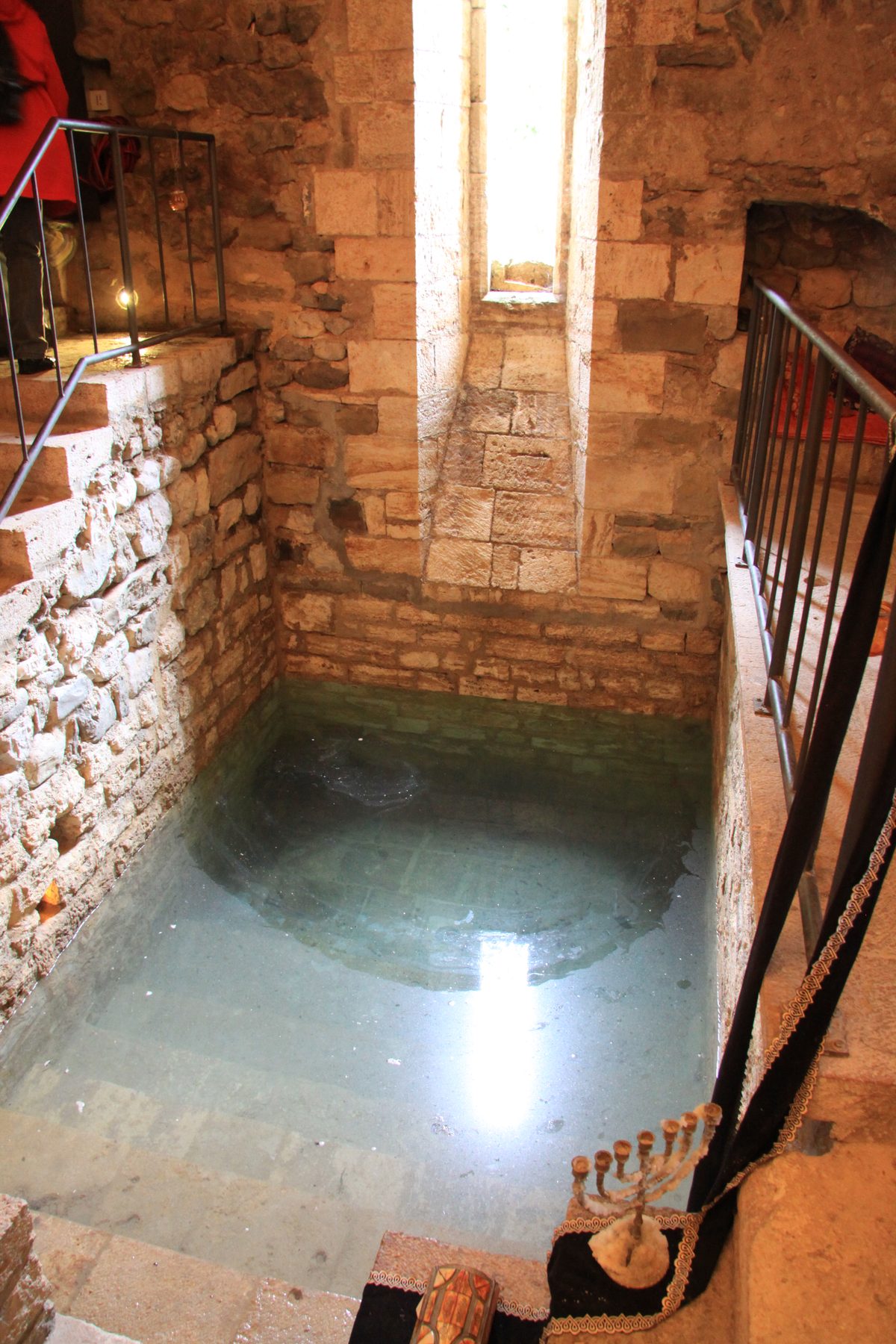
In 1998, construction workers digging near the site of Erfurt's medieval Jewish quarter, in what is now central Germany, broke into a hiding place that had gone undisturbed for roughly six and a half centuries. Inside were around 3,000 silver coins, a stack of silver ingots, and a small collection of finely worked silverware - cups, brooches, belt fittings - along with one object that has become the find's signature piece: a gold finger ring, its bezel shaped like a miniature Gothic building, engraved around the band with Hebrew letters reading mazal tov, good fortune.
Someone buried this hoard with care, in a strongbox, in a cellar close to what was then Erfurt's synagogue and its Jewish street. They did not come back for it. The most likely explanation sits in the historical record of the city itself: Erfurt's Jewish community was destroyed in a pogrom in 1349, during the wave of massacres that swept German-speaking Europe as the Black Death spread and Jews were falsely blamed for poisoning wells. A hoard hidden and never recovered, in a town where the Jewish community was violently wiped out at roughly that time, is about as close as archaeology gets to a dated event rather than a vague period.
What was found
The bulk of the hoard, by weight, is coin: several thousand silver pieces, mostly the small regional coinage in circulation across Thuringia and neighbouring territories in the first half of the fourteenth century, together with silver ingots and bars that functioned as bullion rather than currency. This is the pattern of a merchant's or moneylender's working capital, not a private family's savings - consistent with what is known of the economic role Jewish communities were pushed into across medieval German towns, where guild membership and land ownership were closed to them and moneylending was one of the few trades left open.
The silverware is smaller in bulk but larger in interest: drinking vessels, a hair clasp, brooches, and belt mounts, several of Gothic design consistent with contemporary German craftsmanship. And then the ring. Jewish ceremonial wedding rings from this period are extremely rare survivals - most were melted down, lost, or simply never made it through the centuries that followed - and the Erfurt ring is one of only a small handful known anywhere. Its architectural bezel, a tiny gabled and towered structure sitting on top of the band, is a recognised type: rings like it appear to have been ceremonial objects used at the wedding itself rather than everyday jewellery, too large and elaborate for daily wear.
The Erfurt Treasure
A hoard of roughly 3,000 silver coins, silver ingots, and around sixty pieces of silverware, discovered in 1998 during construction work near the site of Erfurt's medieval Jewish quarter. Buried in a strongbox in a cellar and never recovered. The coin evidence dates the burial to around the middle of the fourteenth century, matching the destruction of Erfurt's Jewish community in the pogrom of 1349. Held today at the Old Synagogue, Erfurt.
Old Synagogue, ErfurtWhat the ring says
The Hebrew inscription running around the ring's band reads mazal tov, meaning good luck or good fortune - the phrase still used today to mark a wedding, a birth, or any joyful occasion. Rings of this architectural type are understood by scholars to be Jewish ceremonial wedding rings, used to symbolise the home the couple would build together; the building on the bezel is generally read as standing for either a house or, more specifically, the Temple in Jerusalem. Because they were costly, elaborate, and owned communally by families rather than kept as everyday jewellery, very few have survived anywhere. The Erfurt ring is among the handful known, and it sits alongside comparable finds from other German towns whose Jewish communities suffered similar fates in the same period.
The debate around objects like this tends not to be about whether they are genuine - the hoard's coins and the archaeological context are not seriously disputed - but about how far a single buried strongbox can be read as a portrait of an entire community. A hoard shows what one household, or a small circle of households, thought worth hiding on a particular day. It does not, on its own, tell us how prosperous Erfurt's Jews were as a whole, or whether burial was a hurried response to specific danger or a longer-standing practice of storing wealth outside the house. What the hoard does establish, without much room for argument, is scale and craft: a functioning, comparatively wealthy Jewish community trading in silver, commissioning fine metalwork, and marking its own weddings with objects made to last - abruptly and violently ended.
The gold wedding ring
A gold finger ring with an architectural bezel - a miniature gabled and turreted building - and a Hebrew inscription reading mazal tov around the band. One of only a small number of surviving medieval Jewish ceremonial wedding rings known anywhere, and the best-known single object from the Erfurt hoard. Too large and elaborate for everyday wear; understood as a ceremonial object used at the wedding itself. Displayed with the rest of the hoard at the Old Synagogue, Erfurt.
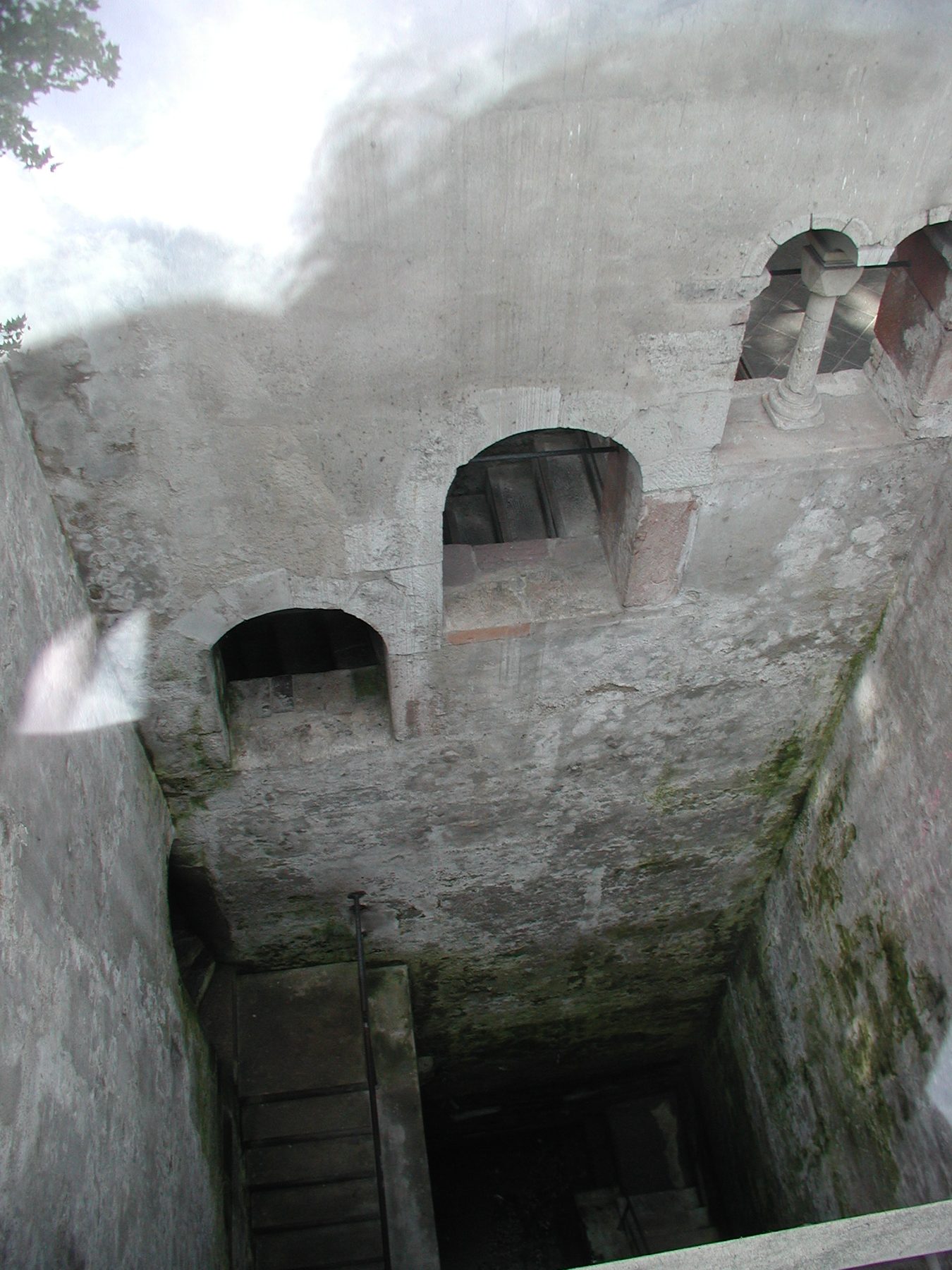
Old Synagogue, ErfurtErfurt's Jewish community did not vanish for good after 1349; smaller resettlement followed, before further expulsions ended Jewish life in the city for centuries. What the treasure and the Old Synagogue building together prove, sitting in the same German city seven hundred years apart from the reader, is not an abstraction. It is a functioning, wealthy, craft-commissioning community, its buildings and its buried silver both surviving as objects you can walk up to and look at - proof that does not need anyone's testimony, only eyes.