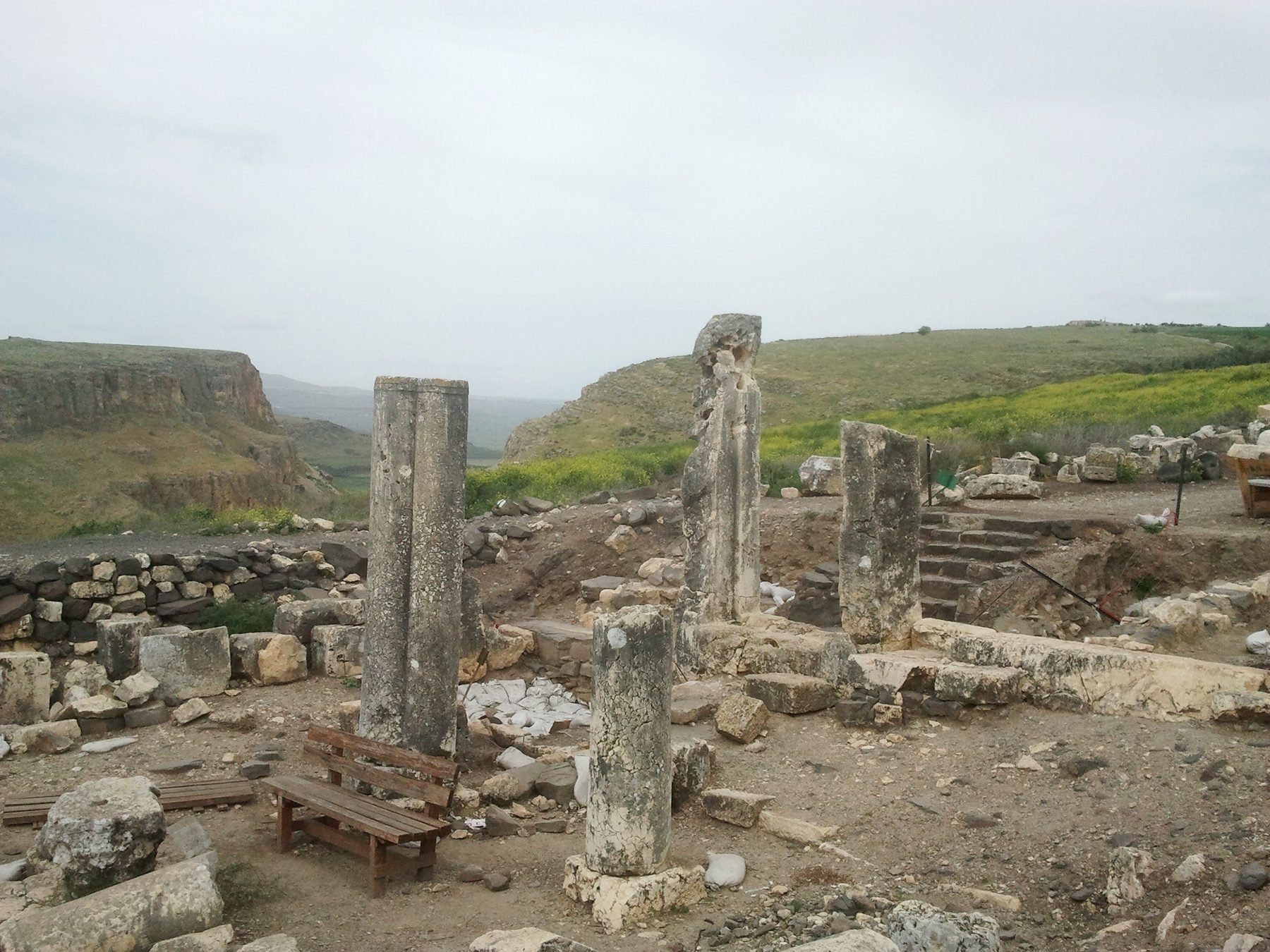
The synagogue at Deir Aziz stands in the southern Golan as a ruin that argues with itself. Its walls are built, in part, from the very stones that once stood higher and fell. Somewhere in late antiquity the building was damaged badly enough that a later community had to choose: abandon the site, or dig the fallen basalt out of the rubble and set it back into a wall. They chose to rebuild, and the rebuilding is still legible in the masonry - a seam where new coursing meets old, an ornamented block set upside down or sideways because it was easier to reuse a shaped stone than quarry a fresh one. The synagogue is evidence twice over: once for the community that first raised it, and once for the community that refused to let its collapse be the end of the story.
Deir Aziz belongs to a cluster of ancient synagogue remains scattered across the volcanic tableland of the Golan Heights, most of them built of the same dark basalt that underlies the whole plateau. Villages here left behind not only prayer halls but oil presses, houses and field walls, all in the same hard black stone, and the synagogues are usually the grandest structures a settlement produced - dressed and carved where the houses around them were plain. Surveys of the region through the twentieth century identified dozens of these sites; a number, including Deir Aziz, were subsequently excavated and partially restored, their standing walls stabilised so that the plan of the building - hall, columns, entrance, and the niche for the Torah ark - can still be read on the ground today.

What the stones show
The building follows the basic grammar shared by the other Golan synagogues: a rectangular hall, rows of columns supporting a raised roof over the centre, benches or standing space along the walls, and, most tellingly, a niche cut into one wall to house the Torah scrolls. That niche is oriented toward Jerusalem, as the ark niches of the other Golan synagogues are, so that anyone facing it for prayer was also facing south-west, toward the city and its lost Temple. The orientation is not decoration. It is the building doing, in stone, what the liturgy does in words - fixing a scattered congregation's attention on one point on the map.
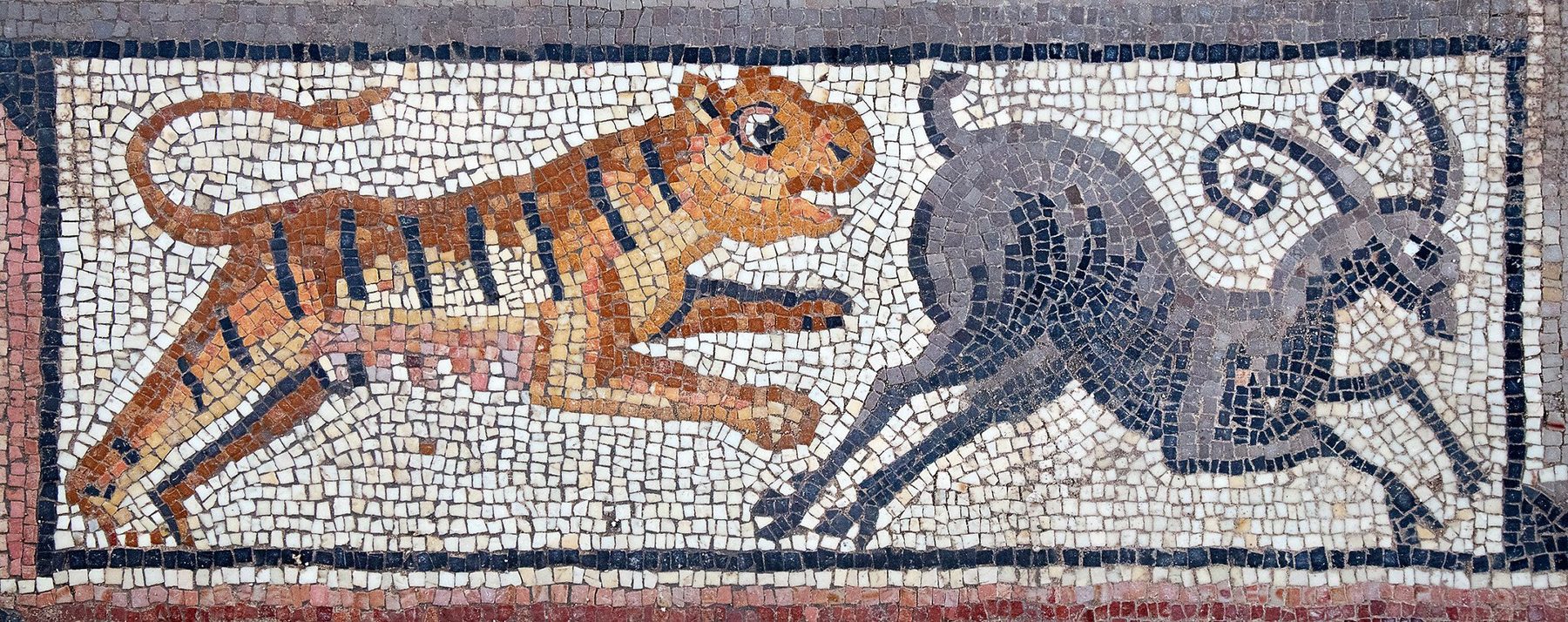
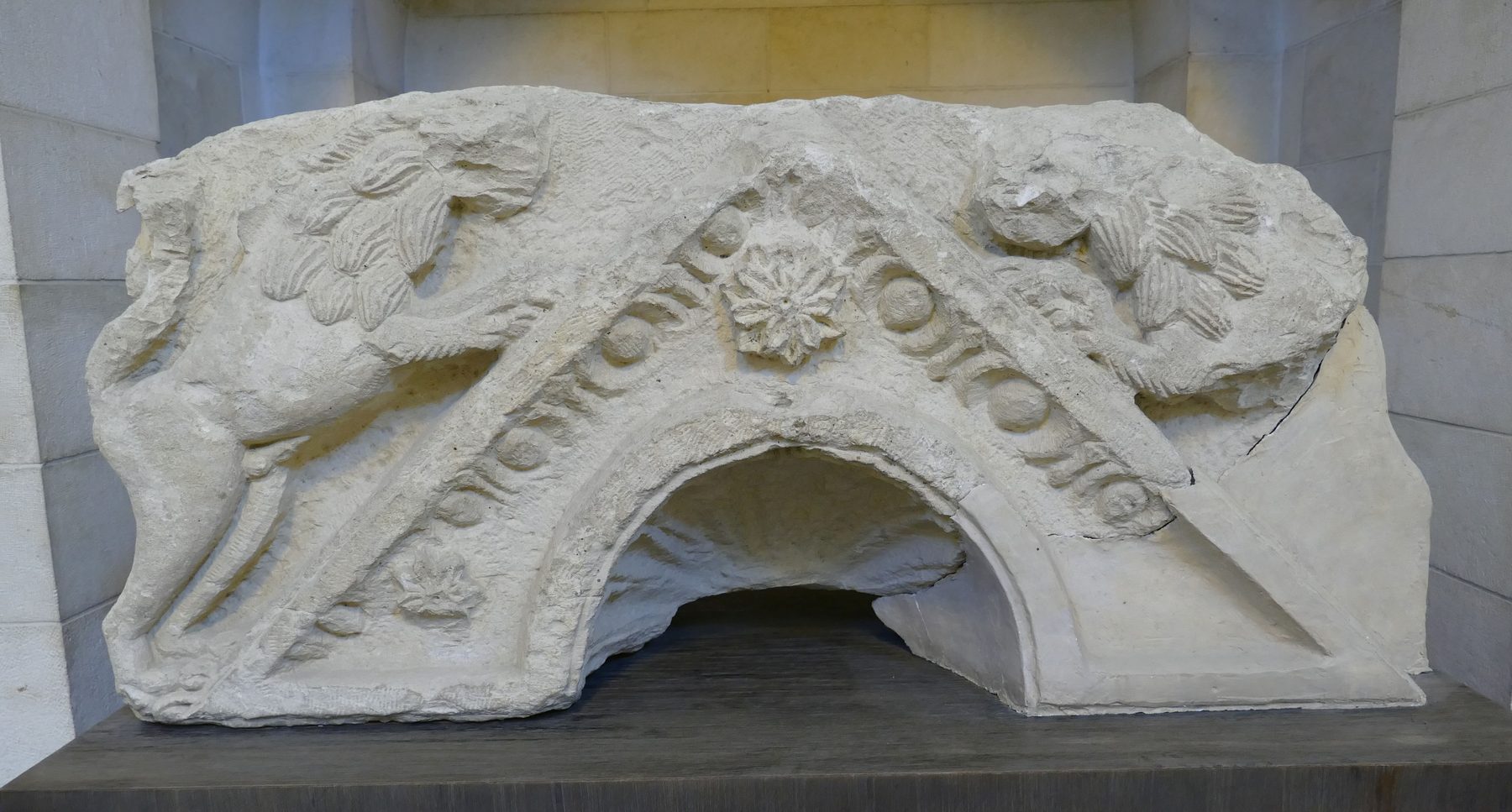
Carved architectural fragments recovered at the site and at neighbouring Golan synagogues carry the decorative vocabulary typical of the region and period: rosettes, wreaths, vine and grape motifs, and the menorah, the seven-branched lamp that is the most frequently repeated Jewish symbol in the ancient built landscape of the Golan and Galilee. Basalt is unforgiving to carve compared with the softer limestone used further west, and the relief on these blocks tends to be blunter and bolder as a result - but the imagery is unmistakably Jewish, and it is what identifies buildings like this one as synagogues rather than simply large public halls.
A hall built, damaged and rebuilt
The synagogue was raised in coursed basalt masonry typical of Golan settlement in the Roman and Byzantine periods. At some point its structure suffered serious damage - the kind of destruction earthquakes are known to have visited on this seismically active region more than once in antiquity. Rather than clear the site and start again, later builders incorporated the fallen, already-shaped blocks into a reconstructed wall, a repair visible today in the mixed coursing of the standing remains.
Golan Heights, in situThe argument over dates
Golan synagogues are notoriously hard to pin to a single century, and Deir Aziz is no exception. The wider debate concerns whether the region's synagogue-building boom belongs mainly to the fourth and fifth centuries, tailing off after the Byzantine period, or whether some buildings continued in use and were repaired well into the early Islamic centuries before the region's Jewish villages were finally abandoned. Because so few of the Golan synagogues preserve a securely dated inscription, the argument turns largely on comparing masonry technique, carved ornament and the pottery and coins recovered in and around the buildings - methods that narrow the range without always settling it. What is not in dispute is that these were working synagogues serving real village populations, not isolated or symbolic structures.
That matters because the Golan is often treated, in general accounts of the ancient world, as marginal territory - a volcanic upland at the edge of things. The synagogues tell a different story. A community that builds a large columned prayer hall, carves it with menorahs and vines, orients its ark toward Jerusalem, and then rebuilds the whole thing out of its own broken stone after disaster, is not a marginal community. It is a settled, resourced, committed one, still there generations after the first builders laid the foundation.
One of a settled cluster
Deir Aziz is one of roughly two dozen ancient synagogue remains identified across the Golan Heights, almost all built in local basalt and sharing the same broad plan of columned hall and Jerusalem-facing ark niche. Together they attest a network of Jewish villages across the plateau through late antiquity, corroborating literary references to Jewish settlement east of the Sea of Galilee in this period with structures anyone can still walk into.
Golan Heights, regional surveyWhy it counts as evidence
A ruin like Deir Aziz proves something narrower and more durable than any single inscription could. It proves that in a particular place, over a particular span of centuries, a Jewish community built, worshipped in, damaged, repaired and kept using a specific building, oriented toward a specific city, decorated with specific and recognisable symbols. None of that depends on a text surviving, a name being remembered, or a single dramatic find. It depends only on stones staying where builders put them, which basalt, more than most other stone, is very good at doing. That is the quiet strength of the glass case register - the object does not need to be eloquent to be reliable.
Further reading