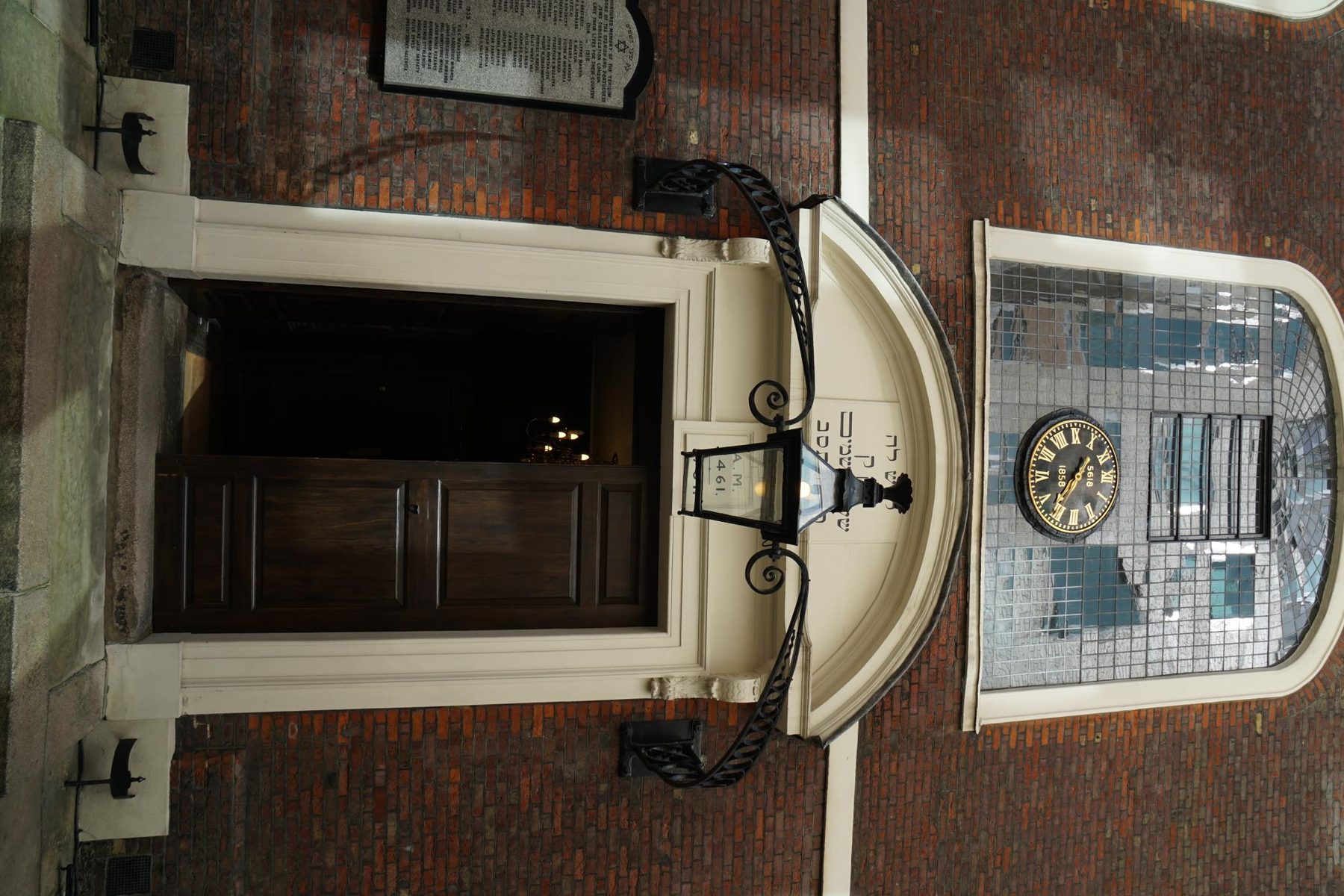
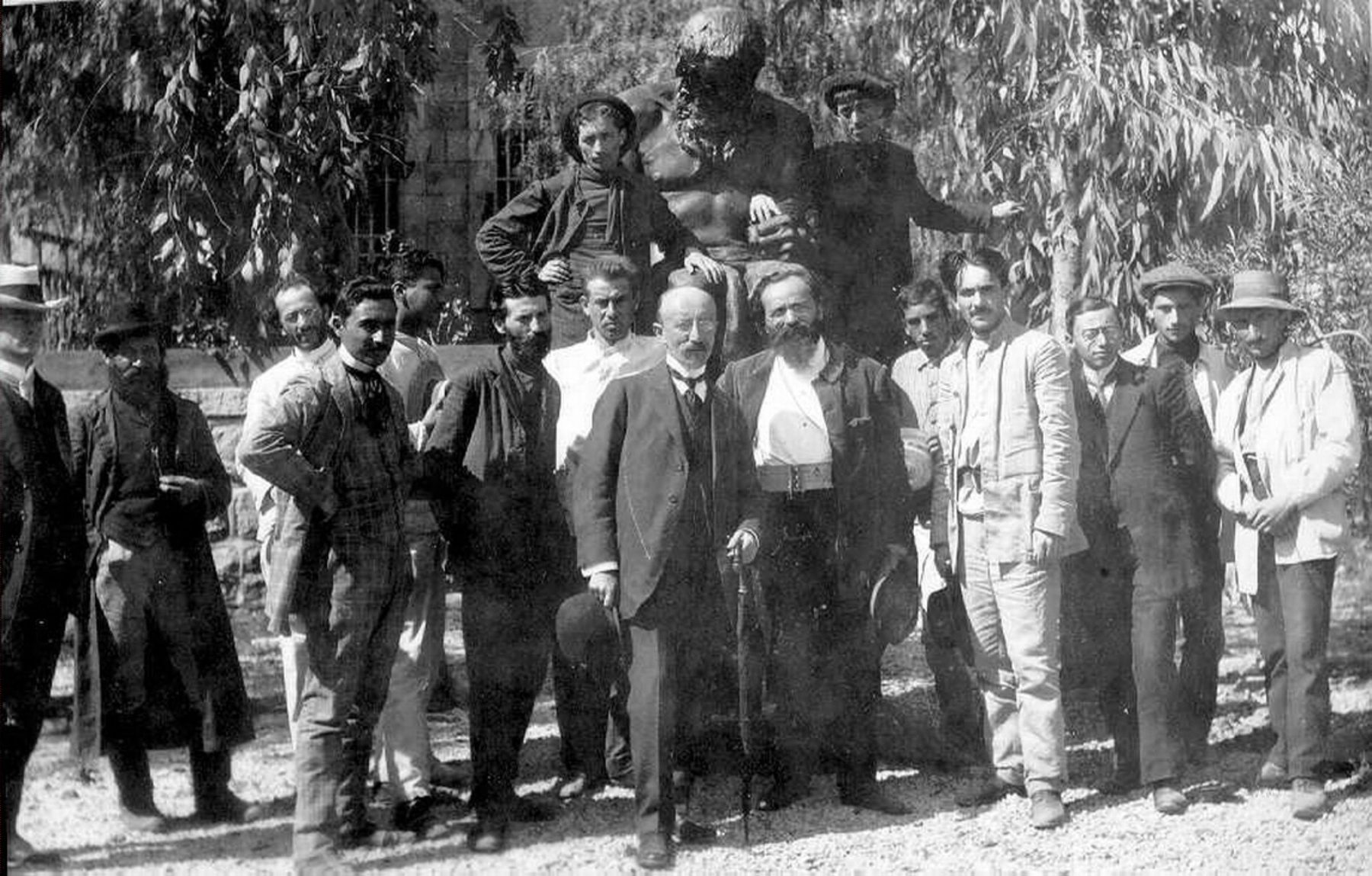
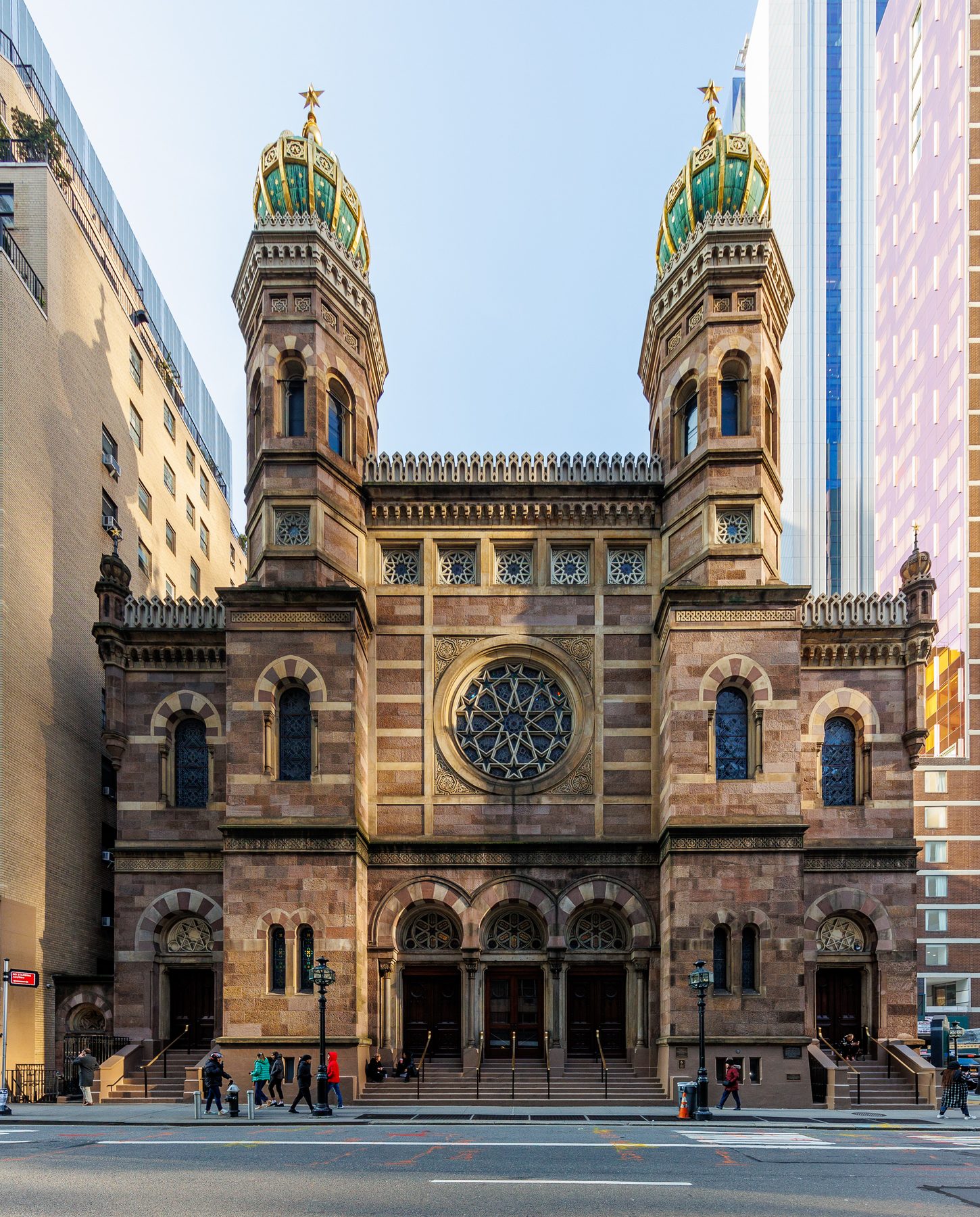
The Choral Synagogue stands on Bolshoy Spasoglinishchevsky Lane, a short walk from the Kremlin, in what was once Moscow's old merchant quarter. It is not a ruin recovered by archaeologists or a fragment read out of a museum case. It is a working building, consecrated in 1891, that has held Jewish prayer on the same site for more than a century, through an imperial expulsion order, through Soviet rule, and into the present. What it proves is not subtle: that a Jewish community existed in Moscow with the wealth, the numbers and the confidence to build a major synagogue at the centre of the Russian empire, and that it did so against the explicit will of the officials meant to stop it.
The building's own history is the evidence. Its construction, its funding, the dispute over its dome, and its survival through decades when Soviet policy made open Jewish worship difficult everywhere else in the country, are all matters of documented record rather than legend. A synagogue that keeps operating on one address for over a hundred years, under three different political systems, is itself a kind of primary source.

Built while the ground was shifting under it
Construction of the synagogue was funded largely by Moscow's Jewish merchant elite, including members of the Gunzburg banking family, and carried out through the second half of the 1880s. The building was substantially complete and consecrated in 1891 - the same year Grand Duke Sergei Alexandrovich, newly appointed governor-general of Moscow, ordered the mass expulsion of most of the city's Jewish residents. The synagogue that had just opened its doors was, for a time, a house of prayer for a community the state was actively removing from the city.
Held in situ, Moscow, RussiaThe dome the authorities would not allow
The building's most contested feature was never its congregation but its silhouette. Soon after the synagogue was completed, city authorities objected to its dome, judging it too prominent and too close in outward form to the cupola of a church - an appearance officials did not wish a synagogue in the imperial capital's near neighbour to project. The dome was ordered removed, and for the following decades the building stood and functioned without the crowning feature its architects had designed. The congregation kept the sanctuary beneath it; the skyline argument was the state's to win, and for a long time it did.
That dispute over a dome is easy to read as a minor matter of planning permission. It was not treated as one at the time. A visible dome announced a synagogue as a permanent, confident civic building rather than a tolerated back-street prayer room, and it was precisely that announcement the authorities moved to suppress. The compromise that resulted - a synagogue allowed to stand, but not permitted to look like what it was from a distance - is a fair physical summary of the whole ambiguous status Russian Jewry held in the late empire: present, propertied, and still not fully welcome to be seen.
Why it matters as evidence
For much of the twentieth century, the Choral Synagogue was one of only a small number of synagogues permitted to operate in the Soviet Union, and the only one in Moscow for long stretches of that period. That scarcity turned it into a landmark of a different kind. On Simchat Torah in the 1960s and 1970s, young Soviet Jews with little formal Jewish education gathered outside the building in numbers the authorities could not easily disperse, dancing in the street when the synagogue itself could not hold them - a visible assertion of identity at a time when Soviet policy discouraged exactly that. Foreign visitors who witnessed these gatherings, including writers reporting on the position of Jews inside the USSR, treated the crowd outside this particular building as evidence that Jewish identity in the Soviet Union had not been extinguished by decades of state pressure, whatever the official statistics on synagogue attendance suggested.
The building's dome was eventually restored during a major reconstruction completed at the turn of this century, returning the synagogue's exterior to something closer to its original design. That restoration is its own small piece of evidence: a feature removed by imperial order in the 1890s could be rebuilt only once the political conditions that had suppressed it were gone. The synagogue did not need to be rediscovered or reconstructed from documents. It only needed the freedom, eventually granted back to it, to look like what it had always been.
Officials could take the dome down. They could not make the congregation underneath it disappear.
One address, three political systems
Consecrated in 1891 under Tsarist rule, restricted and stripped of its dome soon after by order of the imperial governor-general, kept operating - with interruptions but never total closure - through the Soviet period as one of the country's few functioning synagogues, and restored to something close to its original exterior after the fall of the Soviet Union, the building has held one continuous identity across radically different Russian states. That continuity, on one physical site, is the core of what it demonstrates about Jewish presence in Moscow.
Held in situ, Moscow, RussiaFurther reading