Most of what the Roman destruction of Jerusalem in 70 CE left behind is negative space: a wall pulled down, a temple platform stripped of what stood on it, a city whose upper storeys simply are not there any more. The Burnt House is different. It is a room that stopped mid-afternoon. Ash lies where ash fell. A stone weight sits where someone set it down. In one corner, a human forearm lies among the debris, close to an iron spearhead, exactly where the fire and the collapse left it nearly two thousand years ago. Nothing here is reconstructed from inference. It is a single domestic interior, sealed by catastrophe and opened again in the twentieth century almost untouched.
The house sits in what was once Jerusalem's Upper City, the affluent quarter on the western hill where the priestly and mercantile elite of the late Second Temple period built their homes within easy reach of the Temple Mount. It was uncovered during the wide-ranging excavations of the Jewish Quarter conducted after 1967, led by the Hebrew University archaeologist Nahman Avigad, which exposed a run of large, well-appointed mansions along with more modest dwellings - all sharing one grim feature: a layer of ash, collapsed masonry and carbonised wood dating to the Roman siege and sack of the city.
What the room holds
The building is a domestic structure of several rooms on more than one level, including a kitchen area with hearths and ovens, and what excavators identified as a small ritual immersion pool consistent with the purity practices widespread among Jerusalem's Jewish population before 70 CE. Dozens of stone vessels were recovered - stone was preferred for household ware in this period because, by rabbinic understanding, it could not contract ritual impurity the way pottery could. The assemblage as a whole reads as an ordinary, comfortable Jewish household of the late Second Temple period, going about its life until the moment it did not.
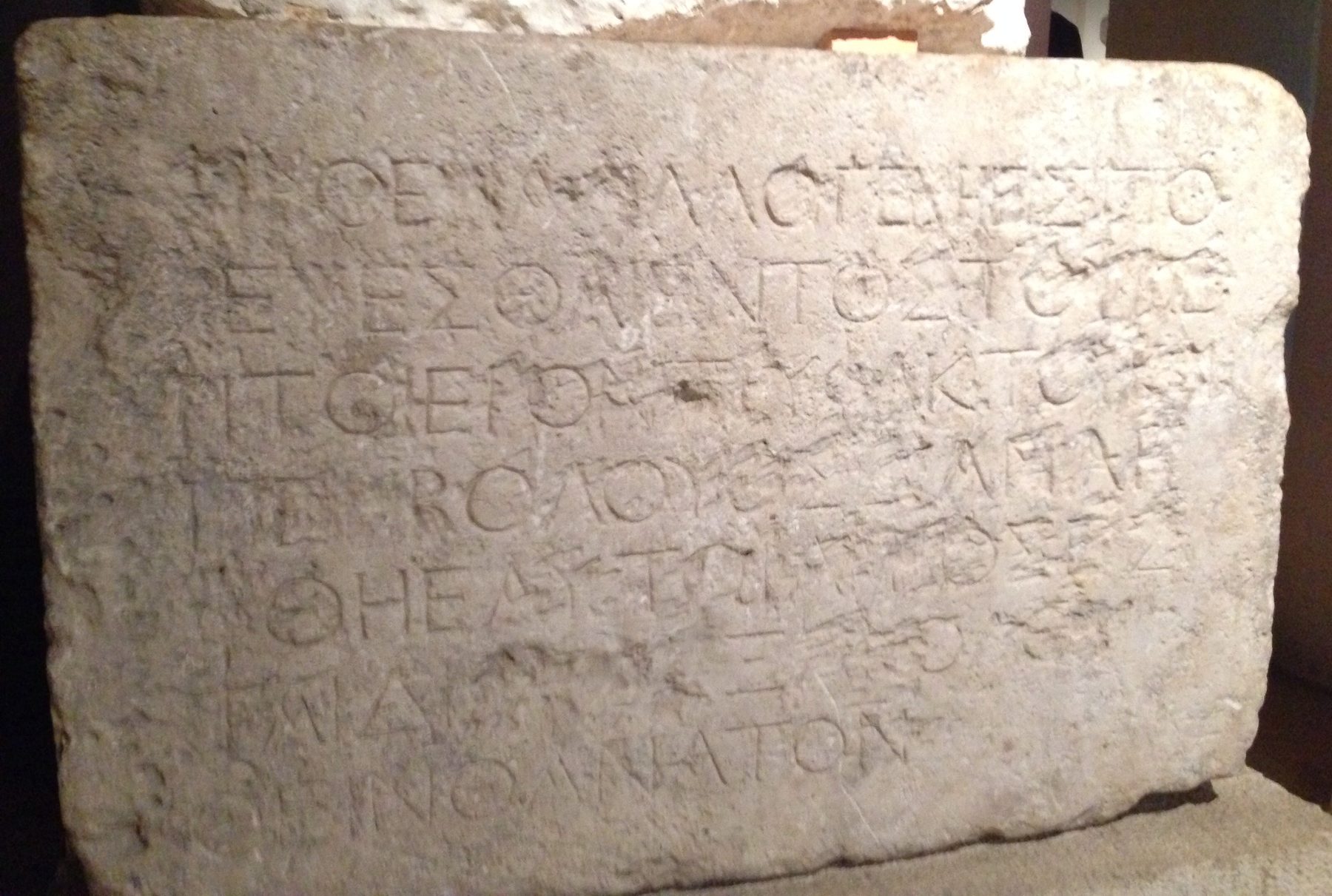
Among the finds is a stone weight, used for weighing out goods, inscribed with a name that scholars read as belonging to the house of Katros - a priestly family also named, unflatteringly, in later rabbinic literature that lists several priestly households accused of exploiting their position over the ordinary population in the Temple's final years. The correspondence between an inscribed object recovered from a burnt house in the Upper City and a family named centuries later in the Talmudic tradition is one of the more striking instances anywhere in Israel of an archaeological find and a literary text independently pointing at the same people.
The finds in situ
Excavation of the house recovered a domestic assemblage - stone vessels, cooking ware, an inscribed stone weight - sealed beneath a destruction layer of ash and collapsed masonry. An iron spearhead and the bones of a human forearm were found together near an interior doorway, undisturbed since the day the building burned. The house has since been conserved and opened to visitors as part of the Jewish Quarter's Herodian-period sites in Jerusalem.
Jewish Quarter excavations, Jerusalem; museum site, JerusalemWhy it matters as evidence
Josephus's account of the fall of Jerusalem describes the Upper City's mansions burning after the Temple itself had fallen, as Roman troops worked systematically through the wealthier quarters. The Burnt House does not merely illustrate that account from a distance - it is a piece of the event itself, preserved by the very fire that ended it. A domestic building of this completeness, sealed on a single afternoon and never rebuilt on the same plan, gives archaeologists something rare: a fixed point in time against which pottery types, stone-vessel styles and household layouts from the same period can be dated with confidence, in Jerusalem and beyond.
It also does something the ruined Temple platform alone cannot. It shows an ordinary house, not a monument - the kitchen, the purification pool, the weights used to trade in the market, the stone cups thought to keep food and drink ritually clean. Rome could burn the building. It could not un-happen the life that had filled it, and the life is still legible in the wreckage: a family, a trade, a household practising the same purity customs described in rabbinic sources written down generations later. The stone confirms the text, and the text explains the stone.
The inscribed weight
A stone weight from the house bears an inscription read as naming the house "of Bar Katros" or "of the sons of Katros" - a priestly family. A passage preserved in rabbinic literature (Tosefta Menahot) names Katros among several priestly families accused of abusing their office in the Temple's final decades, in a line remembered for cursing such households by name. The weight is one of the clearest cases in Jerusalem archaeology of an excavated object and an independent literary tradition converging on the same family.
Museum site, JerusalemThe Temple's destruction is written in the histories. This room was destroyed in the same afternoon, and nobody wrote it down - the ash did that instead.
Further reading