Below the streets of Besalú, a small town in the Garrotxa district of Catalonia, a flight of stone steps drops into a vaulted chamber cut into the riverbank. At the bottom sits a stepped pool, still capable of holding water, fed not by a pipe or a well but by the natural water table linked to the Fluvià river running alongside it. This is a mikveh, a ritual immersion bath built to the specifications Jewish law lays down for such a structure - the water must be living water, gathered without human vessels, connected to a natural source. Besalú's is one of the best-preserved medieval mikvehs anywhere in Europe, and it survives precisely because it was built into the ground rather than added onto a building above it. Buildings get demolished. A stone chamber sunk into a riverbank can simply be forgotten, and then found again.
It was forgotten. The Jewish community of Besalú, one of several that flourished in Catalonia and elsewhere in the Crown of Aragon during the high Middle Ages, was expelled from Spain along with the rest of Iberian Jewry at the end of the fifteenth century, and the town's call - the Jewish quarter - was absorbed back into the ordinary fabric of a small Pyrenean market town. The mikveh's entrance vanished under later building and accumulated ground. It was rediscovered in 1964, during work near the river, and has since been excavated, stabilised and opened for visits as part of the town's Jewish heritage.

What the stone shows
The chamber is built in the plain, functional Romanesque style common to Catalan work of the period: dressed stone, a barrel vault overhead, a stairway descending in stages to the water. There is no inscription naming the community that built it, no dedication plaque of the kind that survives at some other medieval Jewish sites. What identifies it as a mikveh rather than a well or a cistern is its form and its plumbing. A cistern collects and stores water for use; a mikveh must stay connected to its source, so that the water inside it is treated in law as though it were still part of the river or spring itself. The Besalú structure was cut low enough into the ground, and close enough to the Fluvià, that groundwater seeps into the pool continuously. That design choice - deliberate, and expensive to build correctly - is the strongest evidence for what the building was for.
Scholars generally place its construction in the twelfth or thirteenth century, within the period when Besalú's Jewish community is attested in surviving tax and municipal records, though the masonry itself carries no date. The chamber's position, tucked against the riverbank below the town rather than inside a private house, is typical of the way medieval Jewish communities built mikvehs as shared communal infrastructure, maintained collectively rather than owned by one household.
Rediscovery beside the Fluvià
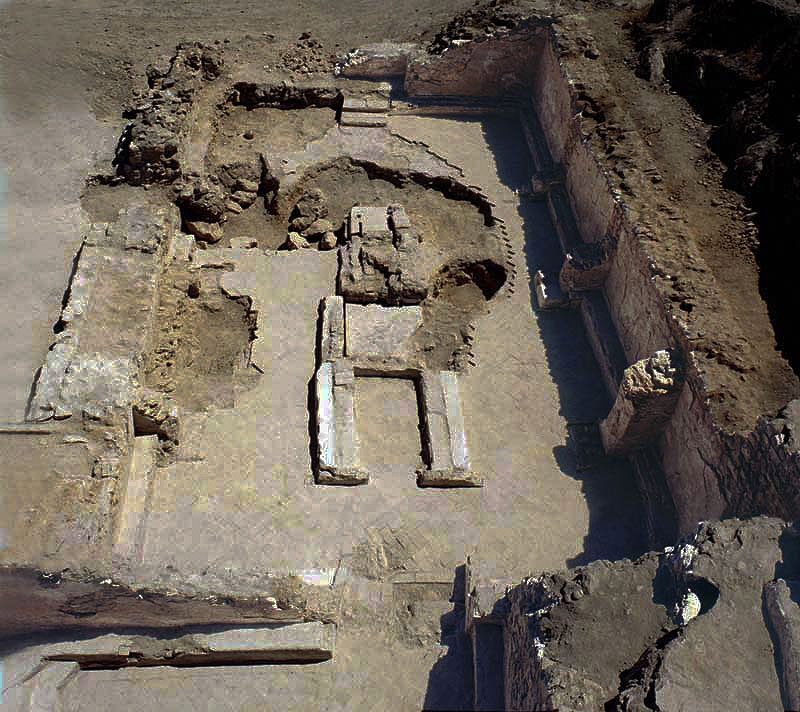
The mikveh was uncovered during work near the riverbank in Besalú in 1964, after standing buried and forgotten since the expulsion of Spain's Jewish communities at the end of the fifteenth century. Excavation exposed a stone stairway descending to a vaulted, stepped pool fed by groundwater connected to the adjoining river - the technical requirement that marks the structure as a ritual bath rather than an ordinary cistern or well. It is maintained in situ and open to visitors as part of Besalú's protected historic quarter.
In situ, Besalú, Girona province, CataloniaWhy a bathhouse is evidence
A mikveh does not argue for anything. It simply sits where it was built, doing the one thing it was built to do, which is stay connected to living water. That plainness is its value as evidence. Chronicles can be copied wrongly, memories can drift, later communities can inflate or shrink the size of what came before them. A stone chamber engineered to a legal specification cannot lie about its own plumbing. Wherever archaeologists find a structure built this way - stepped, sunk below grade, plumbed to a natural source rather than a cistern - they are looking at a community organised enough to build shared religious infrastructure and confident enough to build it well, in dressed stone, meant to last.
Besalú's mikveh corroborates what documentary sources already suggest about medieval Catalan Jewry: a settled, established community, present long enough and secure enough to invest in permanent communal buildings rather than improvised arrangements. It also demonstrates something less often visible in the written record - the practical, physical continuity of Jewish law across the medieval Mediterranean. The same requirement for living water that shaped mikvehs in the Land of Israel in antiquity shaped this one in a Pyrenean market town a thousand years later and a continent away. The stone is the proof that the requirement travelled intact.
The Jewish quarter of Besalú
Besalú's Jewish community is attested in medieval documentation from at least the eleventh century, part of the network of Jewish settlements across Catalonia under the Crown of Aragon. The community maintained its own quarter, or call, in the town, of which the mikveh is the principal surviving structure below ground. Jewish presence in the town ended with the expulsion of 1492, after which the mikveh and much of the call's built fabric passed out of use and, in the case of the bath, out of memory until its rediscovery.
Besalú historic quarter, protected heritage siteFurther reading