High on a limestone cliff face in western Iran, a Persian king had his own account of how he seized and secured an empire carved into the rock, in three languages at once, in a spot chosen so that almost no one could ever climb up to read it. The Behistun Inscription is not a Jewish document. No Israelite hand cut a letter of it. But it is the single largest surviving statement, in the words of the ruler himself, of the empire that decided the returning exiles would have a homeland to return to - and it is still in situ, on the cliff Darius chose, in what is now western Iran.
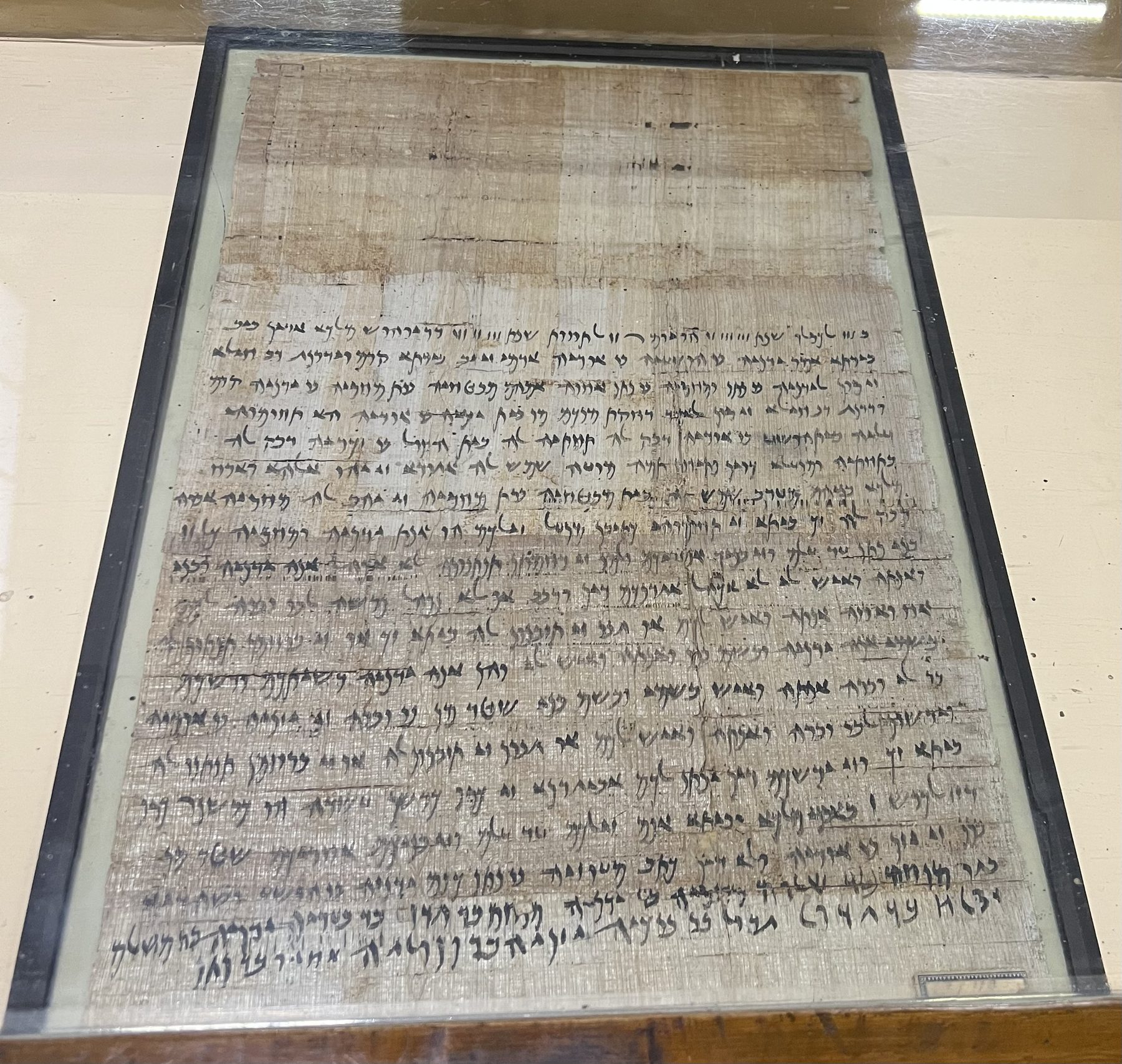
That is the case for reading it here, in the evidence room rather than the story room. The Bible names Cyrus as the king who authorised the return and Darius as the king in whose reign the Second Temple was finally finished, in the sixth year of his rule. Behistun is Darius speaking in his own voice, on his own authority, about the empire he ran - the same imperial machinery, the same chancellery habits, the same multilingual bureaucracy that produced the Aramaic correspondence embedded in the book of Ezra. The inscription does not mention Judah. It corroborates the world Judah was operating inside.

What is on the cliff
The monument combines a carved relief and a long inscribed text. The relief shows Darius I, king of Persia, standing with his foot on the chest of a defeated rival, facing a line of bound captive rebels, with a winged symbol hovering above the scene. The accompanying text, cut into the same rock face, tells the story in Darius's own words: how Cambyses, son of Cyrus, died, how a usurper seized the throne claiming to be Cambyses's brother, and how Darius, a member of a collateral branch of the royal family, put down that usurper and a wave of regional revolts to secure the throne for himself. It is a founding narrative and a warning, addressed to anyone who might doubt his legitimacy.
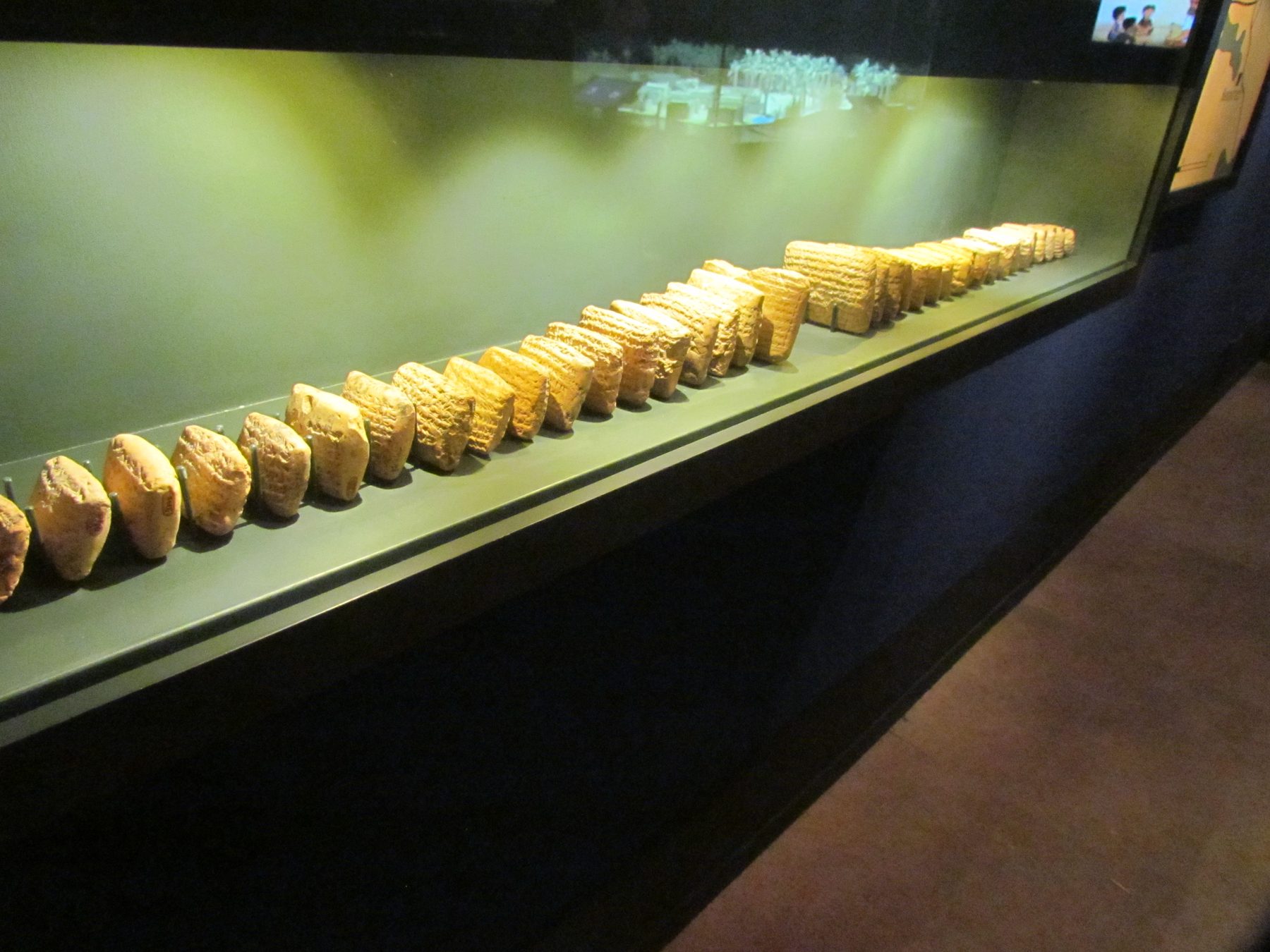
The text is inscribed three times over, in three different languages and three different cuneiform scripts: Old Persian, Elamite and Babylonian. That trilingual repetition is what makes the monument matter far beyond Persian court propaganda. Because the same content survives in three known writing systems, side by side, it functioned as the ancient equivalent of a bilingual dictionary once modern scholars found a way to read even one of the three securely.
Darius's inscription at Bisotun
Carved on the orders of Darius I early in his reign, on a cliff above the ancient road linking Babylon and the Iranian plateau, near the modern town of Bisotun in Kermanshah province, Iran. It remains in its original location, in the open air, and is inscribed in Old Persian, Elamite and Babylonian cuneiform. It was inscribed to be seen from a distance, not climbed to and read up close - the text sits well above the road on the cliff face.
In situ, Bisotun, Kermanshah province, IranWhy it matters as evidence
Behistun's importance to the modern study of the ancient Near East runs through a British officer, Henry Rawlinson, who copied the inscription at considerable physical risk in the 1830s and 1840s, working from ropes and ladders on the cliff face itself, and used the Old Persian text - the shortest and grammatically simplest of the three - as the key to break into Babylonian cuneiform. Old Persian cuneiform had already been partially worked out from shorter texts; Behistun supplied a long, trilingual passage long enough to test and confirm a full decipherment. Once Babylonian cuneiform could be read reliably, the entire corpus of Mesopotamian royal inscriptions, administrative archives and chronicles - the documents against which biblical history is now regularly checked - became legible for the first time in over two thousand years.
That is the second, quieter reason this cliff belongs in the evidence room of Jewish history. Every claim anyone makes about matching a Babylonian king list to a biblical exile, or a Persian administrative record to the returns described in Ezra, rests on the ability to read Akkadian cuneiform at all. That ability rests, in large part, on Behistun. The monument did not survive to serve scholarship. It survived to broadcast one king's legitimacy across an empire. Its use as a decoder ring for lost languages is a by-product historians have exploited ever since.
The key to cuneiform
Henry Rawlinson copied the Old Persian and, later, the Babylonian text of the inscription in successive expeditions and published his results through the Royal Asiatic Society. His work, alongside that of other scholars working on Old Persian and Akkadian in the same decades, confirmed the decipherment of Babylonian cuneiform and opened the Mesopotamian textual record to systematic reading for the first time since antiquity.
Royal Asiatic Society; British Museum cuneiform collectionsNone of that touches Jerusalem directly, and the inscription never claims to. What it fixes, with a precision no biblical text on its own could supply, is the character of the empire the returning exiles lived inside: a state that ruled through satrapies and multiple official languages, that issued proclamations meant to be read the same way in Babylon, in Susa and on a mountain road in Media, and that expected its authority to be recorded in stone for anyone who might later doubt it. The Cyrus decree that sent the exiles home and the correspondence Ezra preserves about permission to keep building the Temple belong to the same administrative culture on display at Bisotun. The cliff does not tell the story of the return. It tells you, in the ruler's own hand, what kind of government the story of the return had to negotiate with.
Further reading