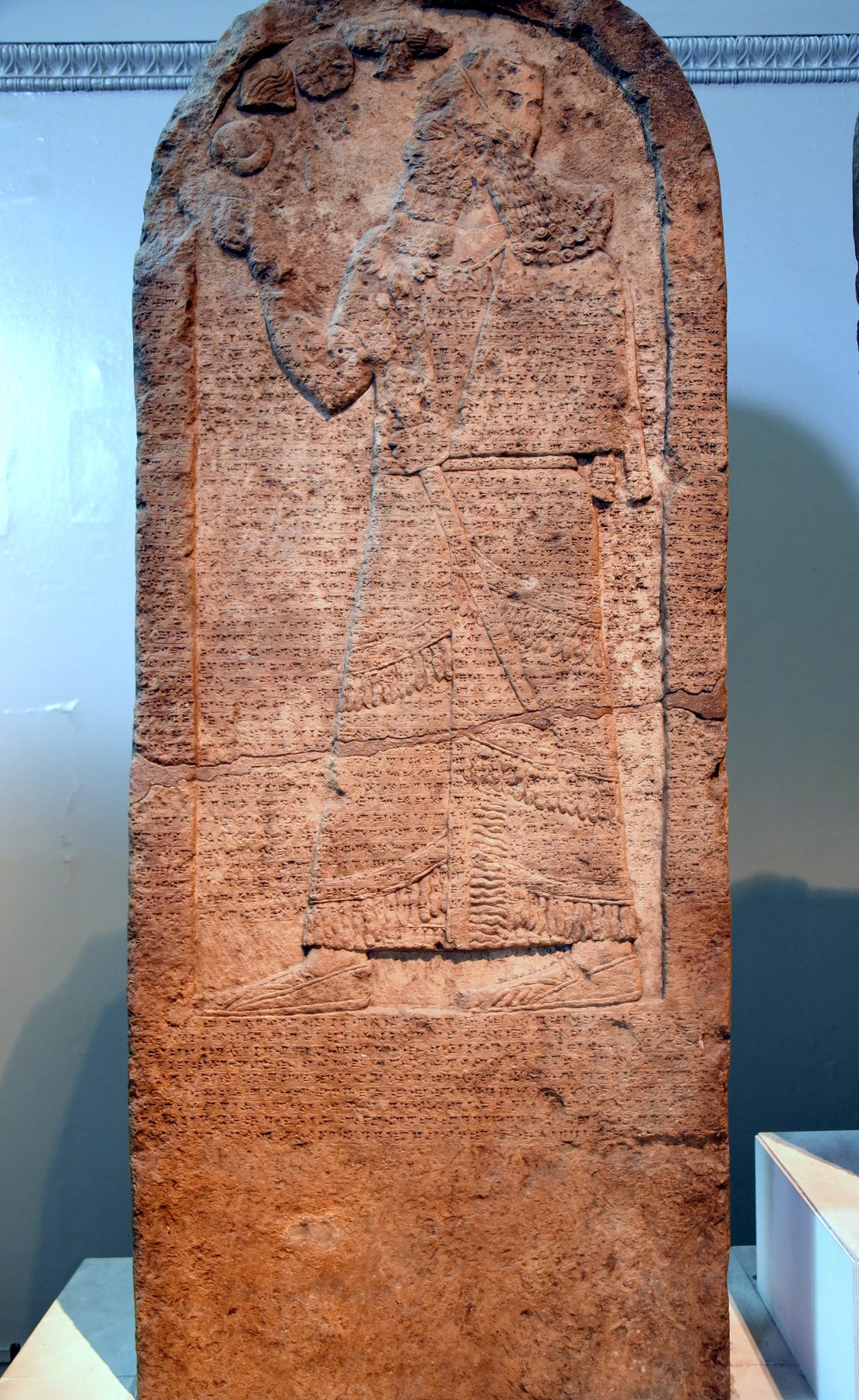
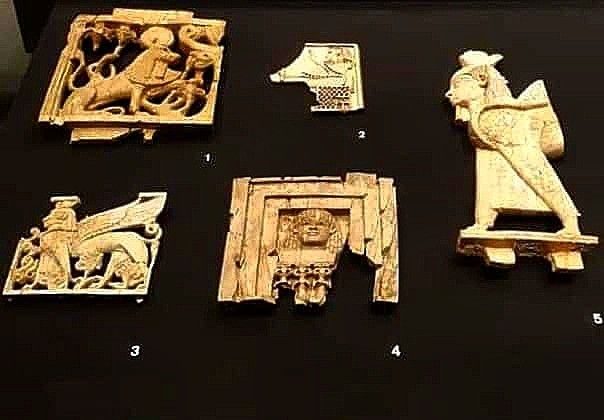
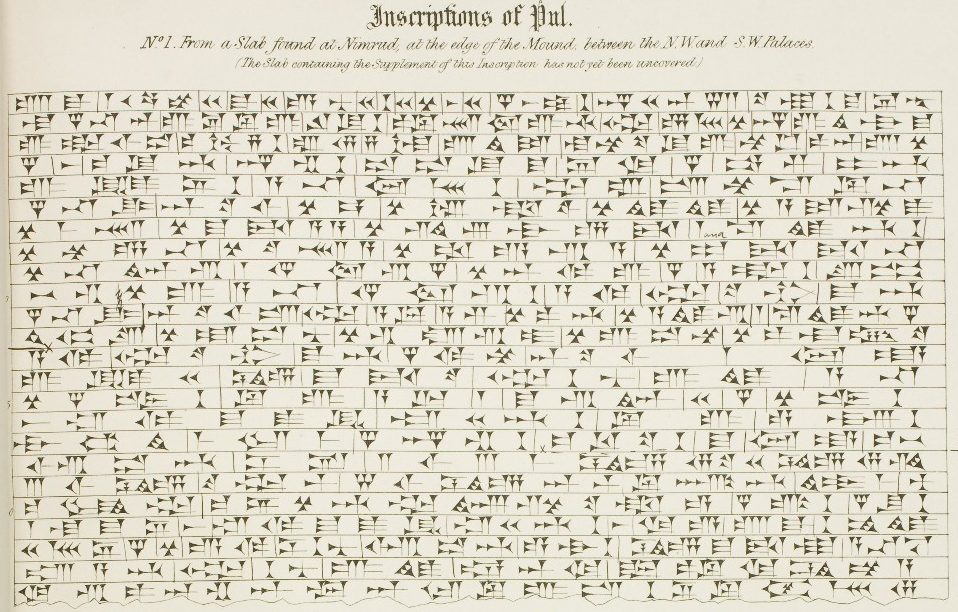
The object is not a single artefact but a set of long bronze strips, once nailed in bands down the height of a pair of great wooden gates at an Assyrian provincial palace. The wood is gone, rotted out of the archaeological record millennia ago. What survives is the metal: horizontal bands of bronze, each hammered in low relief - repoussé, worked from the reverse so the figures stand proud on the front face - showing processions of soldiers, chariots, captives and tribute-bearers, with a running cuneiform caption naming the campaign each scene records. It is a king's military annals turned into a functioning door, opened and shut for years by people at a minor Assyrian town who probably barely looked at the pictures under their hands.
The gates stood at Balawat, a small site near Nimrud in northern Iraq that occupies the position of the ancient town of Imgur-Enlil. They were commissioned in the name of Shalmaneser III, who ruled Assyria through much of the ninth century BCE, and their bands record the same decades of campaigning that fill his other monuments - the annals inscribed on his throne base and obelisk at Nimrud, the record of tribute exacted from kingdom after kingdom along Assyria's western frontier. A second, earlier set of bronze-banded gates from the same site, made for an earlier king, was recovered separately. Between them the two gates give Assyriologists one of the longest continuous runs of narrative relief to survive from the empire.

The bronze bands
Horizontal strips of bronze, originally fixed in registers down the height of a pair of wooden palace gates, each strip decorated in repoussé relief with a continuous frieze of soldiers, chariots, siege scenes, captives and tribute processions. A cuneiform caption runs above or beside each scene, naming the campaign, the year, and the polity being subdued or paying tribute. The bands belong among the fullest surviving narrative records of a single Assyrian king's wars.
British Museum, LondonA name from the other side of the border
What makes the gates matter to readers of the Hebrew Bible is not a single dramatic image but a name that recurs in the captions and in Shalmaneser's other inscriptions: Hazael of Damascus. Hazael appears in the books of Kings as king of Aram-Damascus, a persistent military threat to the northern kingdom of Israel across the reigns of several of its kings - a ruler remembered in the biblical account as having seized the Aramean throne by killing his predecessor. Assyrian sources describe the same man, from the outside, as a usurper who took the throne of Damascus and who Shalmaneser fought and boxed into his own capital during one of the campaigns the gate-bands commemorate.
Neither record was written with the other in mind. The biblical narrative is theological history, concerned with Israel's kings and their fidelity; the Assyrian bands are royal self-glorification, concerned with tribute extracted and cities besieged. That the same figure, ruling the same kingdom in the same rough window of the ninth century BCE, appears independently in both is exactly the kind of cross-check the stone register exists to supply. Aram-Damascus was not a detail invented for the biblical story. It was a real, contested, well-armed neighbour, described in these terms by the empire that fought it too.
The Damascus campaigns
Captions on the gate-bands and Shalmaneser III's other inscriptions record repeated campaigns against Hazael of Damascus, describing him as having taken the Aramean throne without dynastic right and recounting battles in which Assyrian forces defeated his army and shut him inside his own capital. The same Hazael appears in the books of Kings as king of Aram, in conflict with the northern kingdom of Israel across the reigns of several Israelite kings of the period.
British Museum, LondonWhy it matters as evidence
The gates were made for an Assyrian audience and an Assyrian purpose - to remind everyone who passed through them, for as long as the gates hung, of a king's victories. They were not made to corroborate anything in Israel's own record, and that is exactly their value. A source with no stake in the biblical narrative, writing in a different language and a different genre, for a different god, independently places a named Aramean king at war in the region and period the biblical account describes, fighting the same kind of small Levantine states - Israel among them - that the Assyrian annals treat as tribute-payers on their western frontier.
The gates also do something the stone monuments of Nimrud and Nineveh mostly cannot: they show scale. A relief carved into a palace wall records one moment. A pair of gates banded top to bottom in bronze, opened and closed for a working lifetime, records a habit of empire - conquest turned into architecture, war folded into the daily furniture of a minor town. Reading the Hazael captions against the books of Kings does not settle every question either text raises about the other. It does establish that both were describing a real, contested ninth-century world, and that neither side needed the other's permission to remember it that way.
Further reading