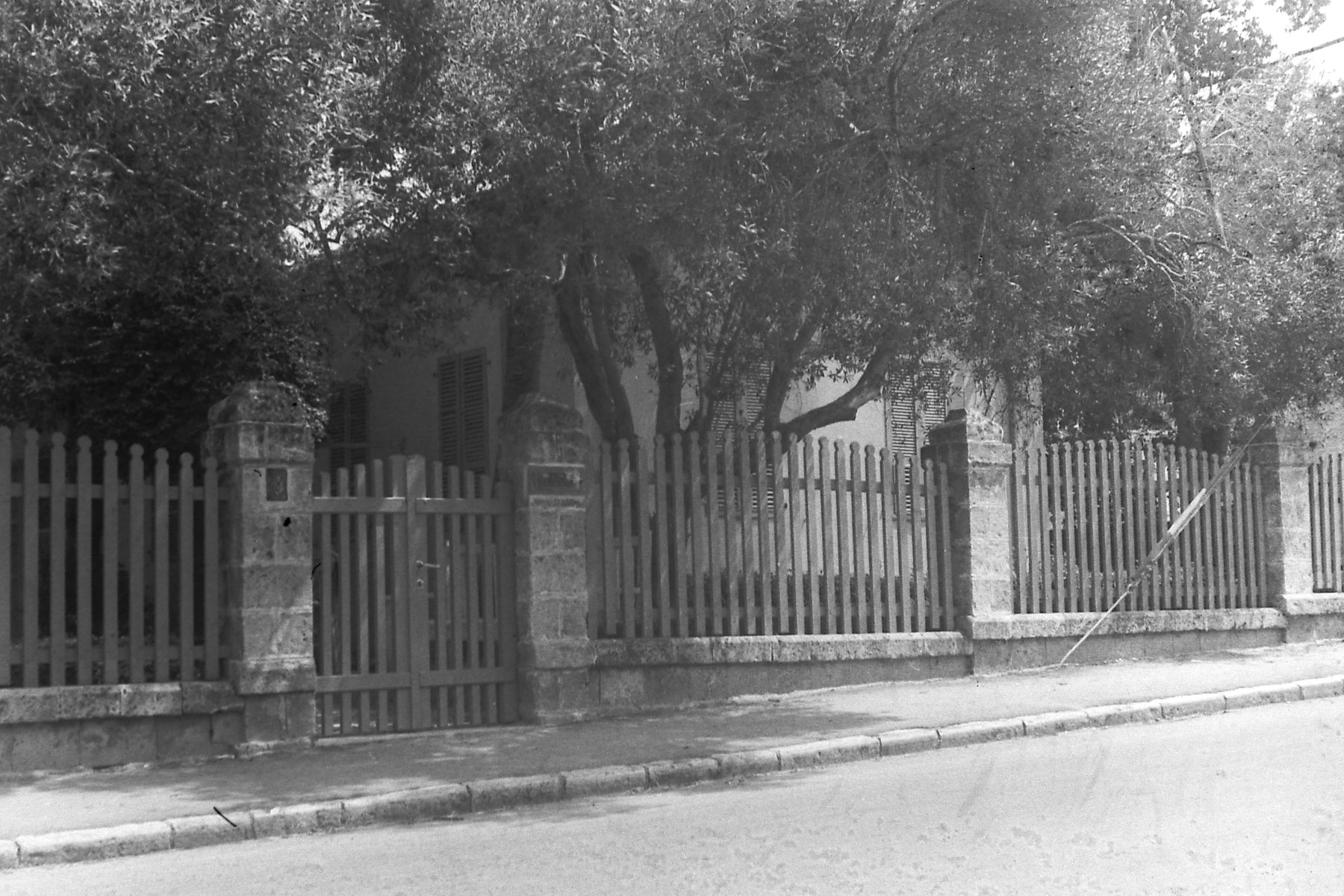
South of Haifa, on the coastal plain near the small town of Atlit, a set of low huts still stands behind a double fence of barbed wire. Guard towers mark the corners. A row of shower blocks sits apart from the barracks, plumbed for delousing on arrival. None of it has been rebuilt from plans or reconstructed from photographs - it is the camp itself, on its original ground, where the British Mandate authorities held Jews who had reached the shore of Palestine without a certificate.
Between 1939 and 1948, under the restrictions of the White Paper that capped Jewish immigration into Palestine, thousands of people who arrived by sea outside the legal quota were classified as illegal immigrants and processed here. Many were survivors of the camps and the war in Europe who had crossed the Mediterranean in overcrowded, barely seaworthy vessels run by the clandestine immigration network known as Aliyah Bet. Reaching the coast did not mean reaching freedom. It meant a fence, a number, and an uncertain wait behind it.
Atlit is unusual among sites of evidence on this site not because of an inscription or an object taken from the ground, but because the structure itself is the exhibit. The huts, the fencing, the delousing showers and the watchtowers are original fabric from the detention years, kept in place rather than moved to a museum case. What the camp demonstrates is procedural and administrative: how a government that had itself just fought a war against the murder of Jews in Europe processed the survivors of that murder as violators of an immigration quota when they tried to reach the one territory promised to them by mandate.

What the site shows
The camp held people for periods ranging from days to many months, depending on the immigration quota available and the pace of British processing. It functioned as a screening station as much as a prison: detainees were interviewed, registered and eventually released into Jewish Palestine once a certificate could be matched to them, or in some periods deported to detention camps on Cyprus when the Atlit facility and the quota were both full. The population moved through in waves that tracked the wider catastrophe in Europe - the camp's records for the years immediately after 1945 reflect the arrival of Holocaust survivors in numbers the legal quota had no room for.
The best-known single event at Atlit is a rescue rather than a routine transfer. In October 1945, members of the Palmach, the strike force of the pre-state Jewish defence organisation, staged a night raid on the camp and freed the roughly two hundred detainees held there at the time, moving them on foot into the nearby Jewish settlements before British forces could intervene. Yitzhak Rabin, then a young Palmach officer and decades later prime minister of Israel, took part in the operation. The raid is documented in British Mandate records of the period as well as in Israeli accounts, and it remains the camp's most concrete demonstration that detention here was contested from the first year, not accepted as settled policy.
A detention station under the White Paper
Built by the British Mandate administration to hold Jewish immigrants who arrived without certificates under the immigration quota set by the 1939 White Paper, the camp processed new arrivals through registration, medical screening and delousing before release or, when quota space ran out, transfer to further detention. It operated for the full span of the Mandate's final decade, closing with the end of British rule in 1948.
In situ, Atlit, IsraelFurther reading
The Palmach raid
On the night of 9 to 10 October 1945, Palmach fighters cut through the camp's perimeter fence and led the roughly two hundred detainees held there out of the camp and on foot to safety in nearby Jewish settlements, ahead of British forces sent to recover them. The operation is recorded in both British Mandate accounts of the period and Israeli Palmach histories, and is remembered as one of the organisation's defining actions against the immigration restrictions of the White Paper years.
Palmach and Mandate-period recordsWhy the site is evidence
Atlit matters as evidence because it removes ambiguity from a period often told only in numbers. A quota is an abstraction; a fence, a guard tower and a delousing block are not. The camp shows, in structure rather than testimony alone, exactly what "outside the legal quota" meant in practice for a person who had survived the war in Europe and reached the shore of the land promised to them: registration, confinement, and a wait behind wire before release was granted. That the site was contested in its own time, culminating in an armed rescue rather than quiet acceptance, is itself part of what the stone and wire record. The camp was restored as a memorial and heritage site and is open to visitors today, its huts and fences kept as they were rather than replaced by an interpretive model.
The quota was a line on paper. The fence at Atlit is what the line looked like to a person standing in front of it.