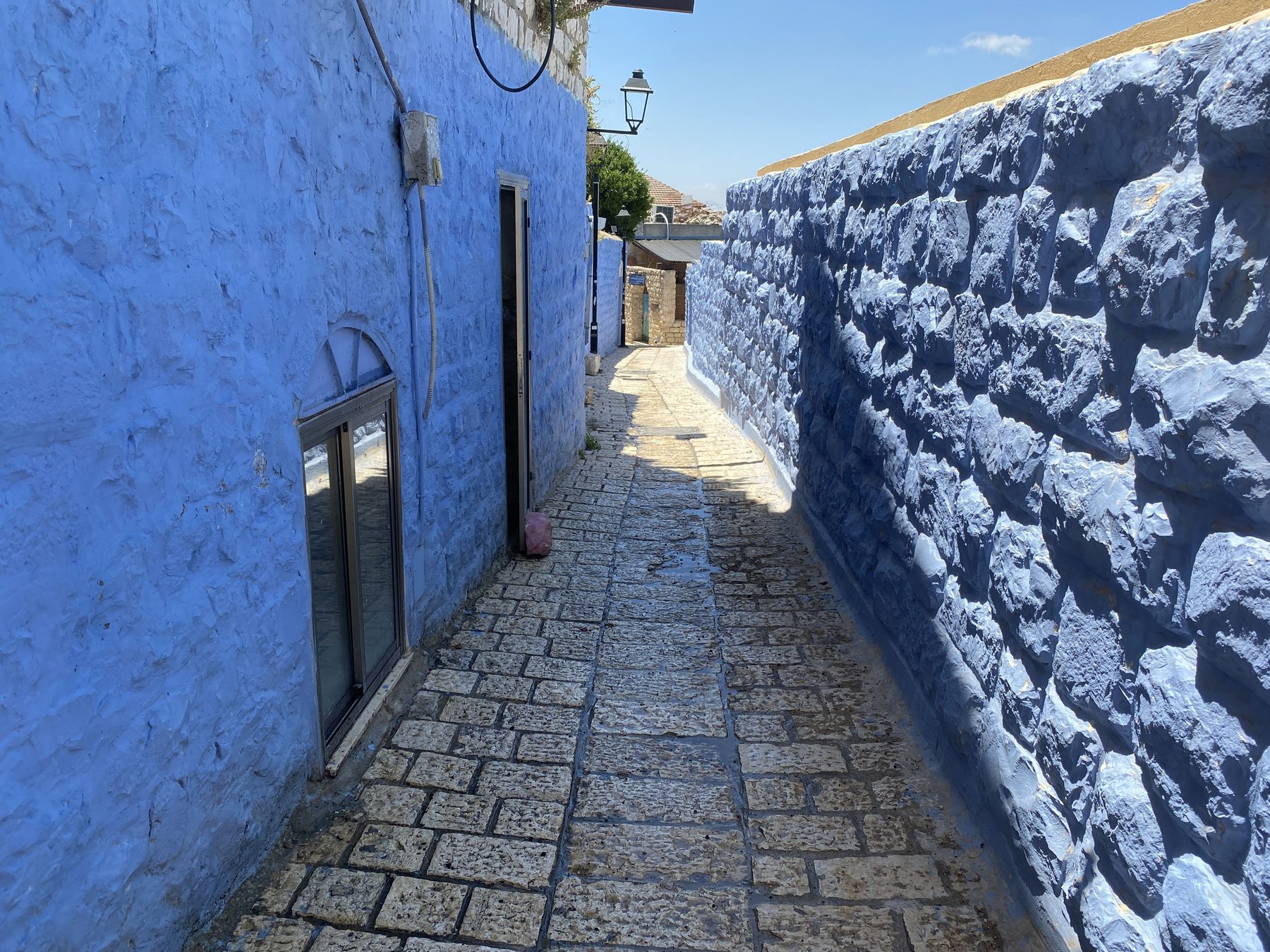
Walk down through the stepped lanes of Safed's old Jewish quarter and you reach a low stone building tucked into the hillside, its interior dim and gold-worked, its Ark carved in a style that owes as much to Ottoman craftsmanship as to any synagogue tradition further west. This is the Ari Ashkenazi Synagogue. It stands on ground associated with Rabbi Isaac Luria, the sixteenth-century mystic known by the acronym "the Ari" - ha-Ari, the Lion - whose teaching reshaped Jewish mysticism in the decades he spent in this town. The building is not a ruin behind glass. It is a functioning synagogue, and that continuity is itself part of what it proves.
Safed's rise as a centre of Kabbalah in the sixteenth century is one of the better-documented chapters of early-modern Jewish intellectual life. Exiles from Spain and Portugal, scholars from Ottoman lands, and a concentration of mystics and legalists unmatched anywhere else at the time gathered in this Galilean hill town within a few decades of one another. The Ari arrived from Egypt and taught in Safed only briefly before his death in 1572, yet his circle produced a body of doctrine that spread through the Jewish world within a generation, carried largely by disciples who wrote down and disseminated what he is said to have taught orally. The synagogue that bears his name sits inside that story as a physical anchor - a place the tradition insists he prayed, in a quarter where the archaeology and the communal memory of Safed's Jewish presence are not in serious dispute.
What the building corroborates is narrower and more useful than a claim about any one rabbi's footsteps. It corroborates that Safed's Jewish community was substantial, resourced and organised enough by the Ottoman period to build and sustain more than one synagogue serving distinct communities - an Ashkenazi congregation alongside a Sephardi one, each eventually acquiring a building carrying the Ari's name. That plurality of institutions, catering to Jews who had arrived from different parts of the Jewish world and kept their own liturgical customs even while studying together, is a fact about how Safed actually worked, not merely how later tradition remembers it.

What it says
The synagogue does not carry a dedicatory inscription proving sixteenth-century construction, and it would be dishonest to claim one. Its evidential value lies elsewhere: in the continuity of an Ashkenazi congregation using this site, in the accumulated communal memory of Safed's Jews that ties the building to the Ari's circle, and in the building's own fittings - a carved and gilded Ark, a raised reading platform - that reflect the devotional culture of Ottoman-period Safed rather than any later, imported style. The tradition that the Ari himself prayed here, and that his disciples met in a field nearby to greet the Sabbath, is transmitted through later hagiographic and communal sources rather than a contemporary sixteenth-century document naming this exact building. That gap between attested site and unattested precise date is worth stating plainly rather than smoothing over.
The Sabbath-greeting tradition is the piece of this story that reaches furthest into ordinary Jewish life everywhere. Lecha Dodi, the hymn sung to welcome the Sabbath as a bride, was composed in Safed in the sixteenth century by Rabbi Shlomo Alkabetz, a member of the same circle of mystics that included the Ari. Communal memory places its first singing, or its adoption into common practice, among the kabbalists of Safed going out to the fields at dusk on Friday to greet the Sabbath as she arrived - a practice this synagogue and its Sephardi counterpart are both associated with in the town's own tradition. The hymn itself is not in doubt: it is sung in synagogues worldwide every Friday night, an acrostic spelling the poet's name, one of the most successful liturgical exports any single Jewish community has ever produced. What is harder to pin down with documentary precision is which building, if any single one, hosted that first singing - Safed's kabbalists prayed across several synagogues and moved between them, and the town's oral tradition has attached the memory to more than one site.
An Ashkenazi congregation on a Kabbalah-era site
The Ari Ashkenazi Synagogue serves Safed's Ashkenazi community on a site the town's continuous Jewish tradition associates with Rabbi Isaac Luria's circle. The standing structure is substantially post-1837, following earthquake damage to the old Jewish quarter, but the congregation and the site itself have been in continuous use across that rebuilding. It remains an active synagogue today, not a museum piece, which is itself part of the evidence for an unbroken Jewish presence in Safed since the Ottoman period.
Old Jewish quarter, Safed, Israel - in situWhy it matters as evidence
The Ari Ashkenazi Synagogue matters less as proof of any single rabbi's exact prayer spot than as a durable marker of something larger and better attested: that sixteenth-century Safed hosted a genuine, productive concentration of Jewish mystical and legal scholarship, organised into real congregations that built real buildings and kept them in continuous use for five centuries despite earthquakes, Ottoman and later administrative change, and the town's long isolation as a small Galilean hill community. A legend can be embroidered. A congregation that has occupied the same quarter, rebuilt its synagogue after successive earthquakes, and kept a distinct Ashkenazi identity alongside its Sephardi neighbours for that length of time is a fact on the ground, checkable by anyone who walks into the building on a Friday evening and hears Lecha Dodi sung where the tradition says it was first sung.
Further reading