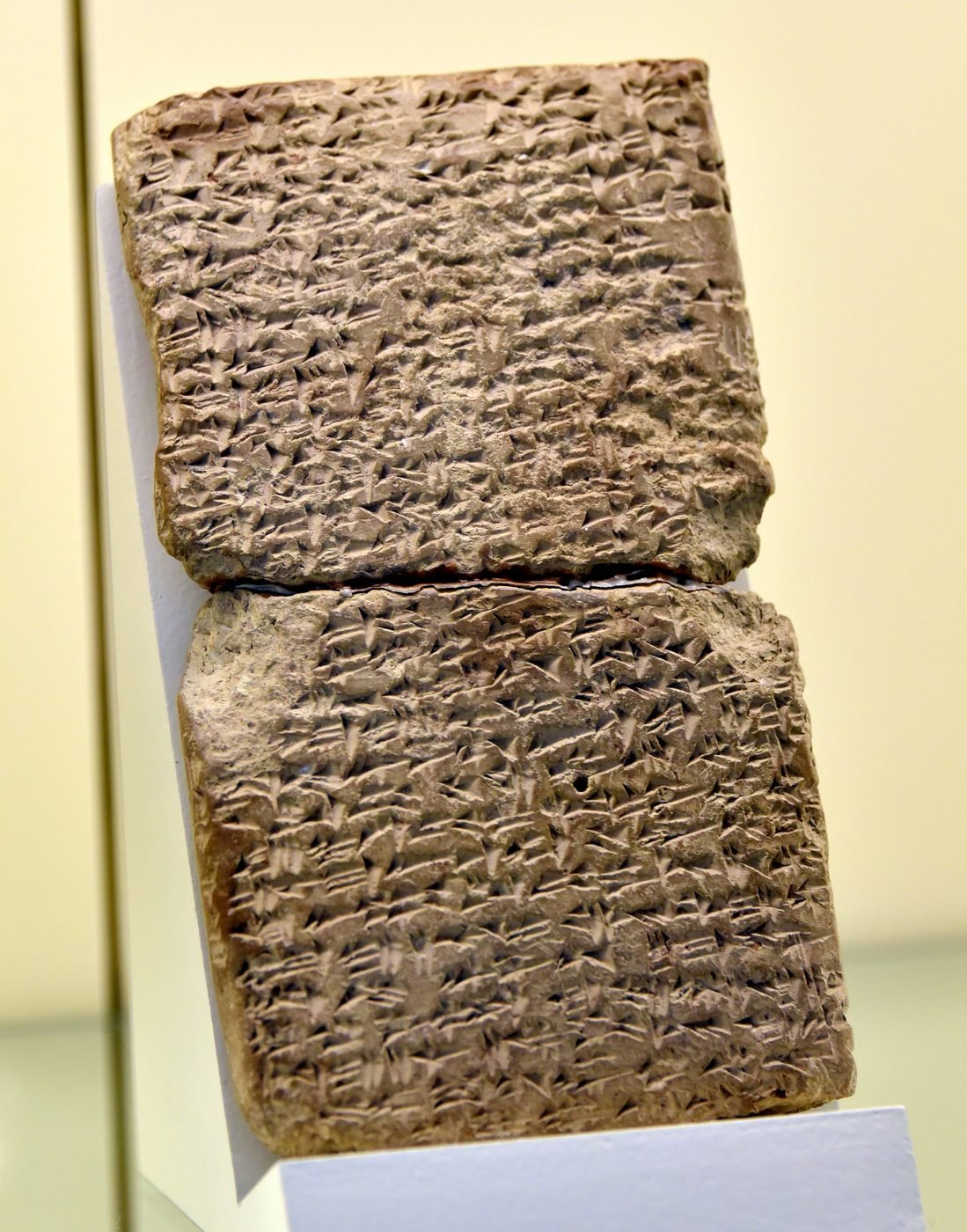
A bulla is not much to look at. It is a lump of clay, usually smaller than a coin, once pressed while soft against the string or cord tying a papyrus document shut, then stamped with a seal to show the document was authentic and unopened. Break the bulla and you could read the letter. Leave it intact and the mark stays, a small administrative fingerprint of a real bureaucracy going about its business. Most bullae from the ancient world were never meant to survive. Clay is not stone; left alone it crumbles back into the ground it came from.
The ones from Jerusalem's City of David survived by accident, and a violent one. In an excavation of a building destroyed by fire - the fire is generally understood to be the Babylonian destruction of Jerusalem in 586 BCE - archaeologists found a room containing dozens of these clay lumps, baked hard and preserved by the very blaze that ended the building's use. Papyrus burns. Clay, fired in the heat of a burning house, does not. What should have been the least durable object in the room turned out to be the one thing the fire could not erase.

What the seals say
Each bulla carries an impression, usually a name and a patronymic set inside a simple border, cut in paleo-Hebrew script and pressed by a personal seal ring or stamp. Most of the names on the Jerusalem bullae belong to nobody we can otherwise identify - officials, scribes and functionaries whose documents are lost even though their seal marks are not. That, on its own, would already be useful: it shows a literate administration issuing and sealing written records in Judah's capital before the kingdom fell.
What makes a small number of these bullae remarkable is that the names on them are not only administrative. They match names the Hebrew Bible also records, attached to the same kind of official role, in the same period. A stamped lump of fired clay and a copied and recopied biblical text, arriving independently at the same name, is the kind of convergence archaeology can offer only rarely - and it is why these small objects carry weight well beyond their size.
The Bulla of Gemaryahu Son of Shaphan
A fired clay bulla from the City of David archive, stamped with a paleo-Hebrew seal impression reading, in translation, "belonging to Gemaryahu son of Shaphan". The Book of Jeremiah names a scribe called Gemaryahu (Gemariah) son of Shaphan, whose chamber in the royal palace complex was used for a public reading of Jeremiah's scroll. The bulla does not prove the two are the same man beyond doubt, but the name, the patronymic and the period all line up, and Shaphan's family appears repeatedly in the biblical narrative as a line of court scribes. A single seal impression rarely settles an identification on its own; here it comes close.
Israel Museum, JerusalemAn administration, not just a name
It is worth resisting the temptation to read this discovery purely as a hunt for biblical celebrities. The real evidential weight of the City of David archive is broader than any single identification. Dozens of sealed documents, now lost, once moved through this room. Someone kept them, filed them, and eventually lost them to fire along with the building that housed them. That is a picture of ordinary state administration - taxation, correspondence, land records, the unglamorous paperwork of a functioning kingdom - caught in the act, at the very end of the First Temple period.
Among the other titles recovered in Jerusalem's royal-period bullae is one naming the office of governor of the city - שר � - עיר, sar ha-ir - a title also used in the biblical books of Kings and Chronicles for the official responsible for Jerusalem under the monarchy. Unlike the Gemaryahu bulla, this find is not tied by name to a specific figure named in the biblical text; its value lies in confirming that the office itself, the very title the Bible uses, was a real administrative post stamped onto real documents in the city the Bible describes it governing.
The Bulla of the Governor of the City
A fired clay bulla from a First Temple-period Jerusalem context, stamped with a paleo-Hebrew impression reading "belonging to the governor of the city" rather than a personal name. The title matches an administrative office the Bible attaches to Jerusalem under the Judahite monarchy, in the books of Kings and Chronicles. Because the seal names an office and not a person, it cannot be tied to any single biblical figure - its evidence is institutional rather than personal, confirming that the post existed and was formal enough to issue sealed documents in its own right.
Israel Museum, JerusalemWhy a lump of clay counts as evidence
None of this depends on faith or tradition to hold up. A bulla is a physical object, excavated in a documented stratum, legible under a magnifying glass, sitting today behind glass at the Israel Museum for anyone to examine. It either carries the impression it appears to carry or it does not; the reading can be checked, and has been, repeatedly. That is the whole discipline of the stone register on this site - not "the Bible says so therefore it is true", but "here is an object, here is where it was found, here is what it says, and here is what that does and does not establish".
What these bullae establish, modestly and firmly, is that the Book of Jeremiah is describing a real bureaucracy with real officials bearing real names, operating out of a real building in Jerusalem, in the years before the city burned. The clay does not confirm every detail of the narrative built around it. It confirms that the narrative is not invented out of nothing - that behind the text sat an actual administration, sealing actual documents, in the actual city the text describes. A scribe's name pressed into wet clay twenty-six centuries ago, and a scribe's name copied and recopied in a scroll ever since, turned out to be the same name.
Further reading