Before 1947, if you wanted to hold a piece of the Hebrew Bible in your hand and be confident it was genuinely ancient - not a medieval copy, not a printed edition, but a manuscript written while the Second Temple still stood - there was really only one place to go. It wasn't Jerusalem. It was Cambridge, where a set of four papyrus fragments, bought in Egypt at the end of the nineteenth century, sat in the university library carrying a text that scholars had never expected to see so old: the Ten Commandments, followed directly by the Shema.
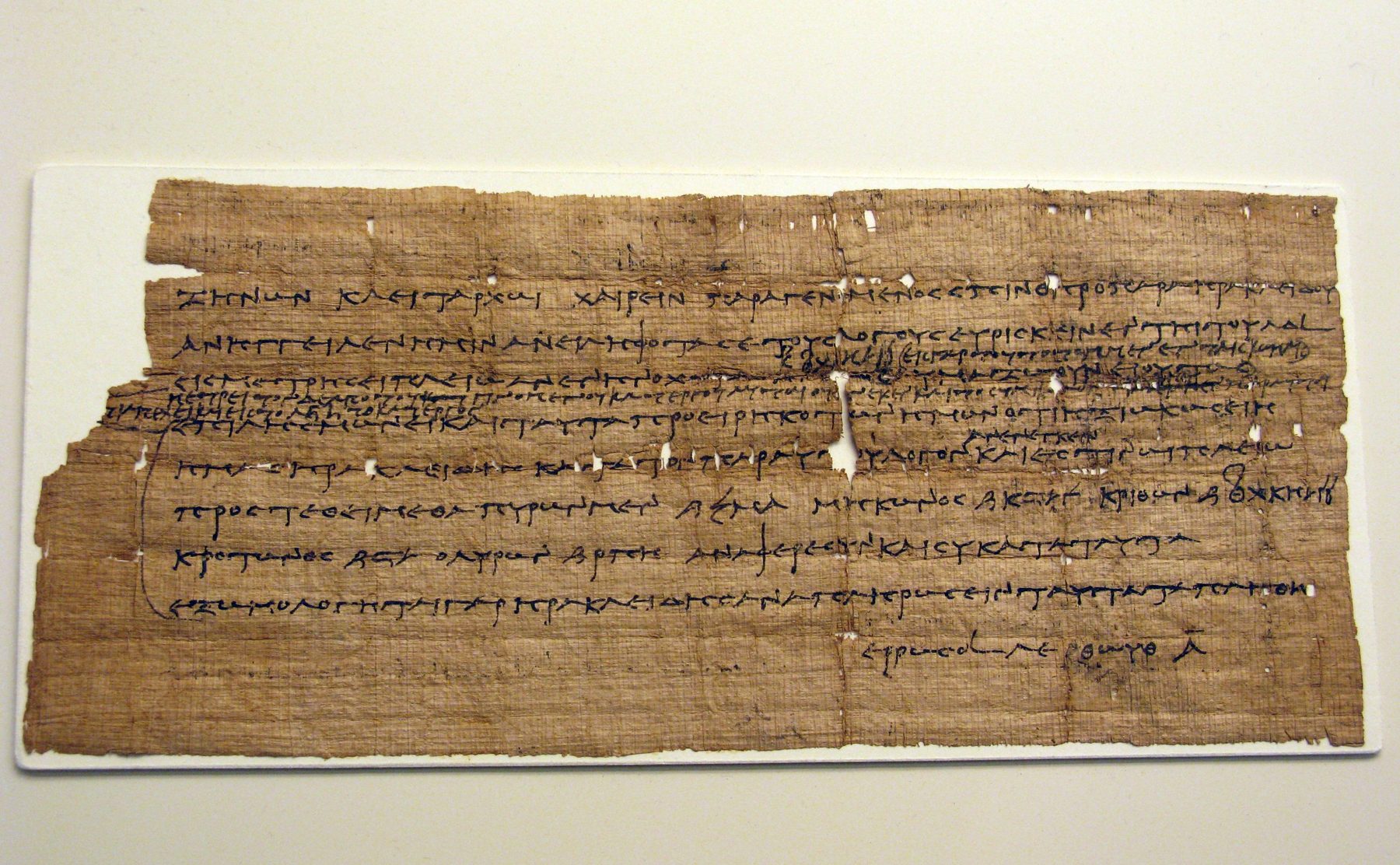
The fragments are small, damaged along their edges, and unglamorous to look at - brittle brown papyrus with faded black ink, the kind of thing that could easily have been thrown away as scrap. What they preserve is not. Together they carry a Hebrew text of the Decalogue and the opening of the Shema, the declaration that begins "Hear, O Israel" and remains the central affirmation of Jewish prayer to this day. For decades, before the Qumran discoveries changed the picture entirely, this was the oldest surviving Hebrew biblical manuscript known to exist.

What it says
The surviving text runs the Ten Commandments in a form that does not match either of the two versions found in the Masoretic Bible exactly - the wording draws on both Exodus 20 and Deuteronomy 5, blending phrases from each - and then moves straight into the Shema, without a break, as though the two passages belonged together as a single unit of recitation. That sequence is telling. It matches the order known from early Jewish prayer practice, in which the Decalogue and the Shema were recited together, and it resembles the kind of text later written on parchment for tefillin and mezuzot - excerpted scripture prepared for devotional use rather than a working copy of a full Torah scroll. Most students of the object now think the Nash Papyrus was written for liturgical or devotional use, not as part of a continuous biblical manuscript.
That reading matters for what the papyrus can and cannot tell us. It is not evidence of how a complete Torah scroll looked in the Hellenistic period. It is evidence that specific verses - the Decalogue and the Shema, paired - were already being copied out and used devotionally centuries before the earliest surviving complete scrolls. The custom of binding scripture to the body and the doorpost, familiar from later Jewish practice, has a genuinely ancient anchor in this single sheet of papyrus.
The Nash Papyrus
Four papyrus fragments, acquired in Egypt by the collector Walter Llewellyn Nash and presented by him to Cambridge University Library, where they are held today. The text is Hebrew, written in a square script, and preserves the Ten Commandments followed directly by the opening of the Shema (Deuteronomy 6:4-5). The wording of the Decalogue draws on both the Exodus and Deuteronomy versions rather than reproducing either exactly. Before the discovery of the Dead Sea Scrolls in 1947, it was the oldest known Hebrew biblical manuscript in existence.
Cambridge University LibraryHow old, and how anyone knows
Papyrus does not carry a date written on it, so the age of the Nash Papyrus has always rested on palaeography - comparing the shapes of its letters against other Hebrew and Aramaic writing that can be dated by other means, such as dated Egyptian papyri and inscriptions from the same general period. Early assessments proposed dates ranging quite widely, from the second century BCE to the first or second century CE. The comparative study that most decisively narrowed the range was carried out by the American scholar William Foxwell Albright, who compared the letterforms against securely dated Egyptian documents and argued for a date in the Maccabean period, in the second century BCE. That dating has held up well and is the one generally cited today, though - as with any palaeographic argument resting on comparison rather than direct dating evidence - it remains an inference from handwriting style rather than a certainty.
Albright's Palaeographic Study
William Foxwell Albright, American scholar, published a comprehensive palaeographic comparison of the Nash Papyrus letterforms against dated Egyptian documents. His study, "A Biblical Fragment from the Maccabaean Age: The Nash Papyrus," appeared in the Journal of Biblical Literature (vol. 56, issue 3, pp. 145 - - - 176). Albright's analysis identified the hand as Maccabean, placing the manuscript in the second century BCE. This dating remains the scholarly consensus.
Journal of Biblical LiteratureWhat the Nash Papyrus proves, soberly stated, is this: that by the Hellenistic period, in a Jewish community living in Egypt, someone owned a Hebrew text pairing the Decalogue with the Shema, written out for personal or devotional use, and that the wording of the commandments in circulation at that time already showed the kind of blending between the Exodus and Deuteronomy versions that later rabbinic tradition would have to reckon with. It is a small, damaged, unglamorous object, and it is also a direct physical link to how scripture was actually handled by a Jewish household in Egypt more than two thousand years ago - not as a claim someone made about the past, but as a thing someone once owned, used and kept.
Further reading