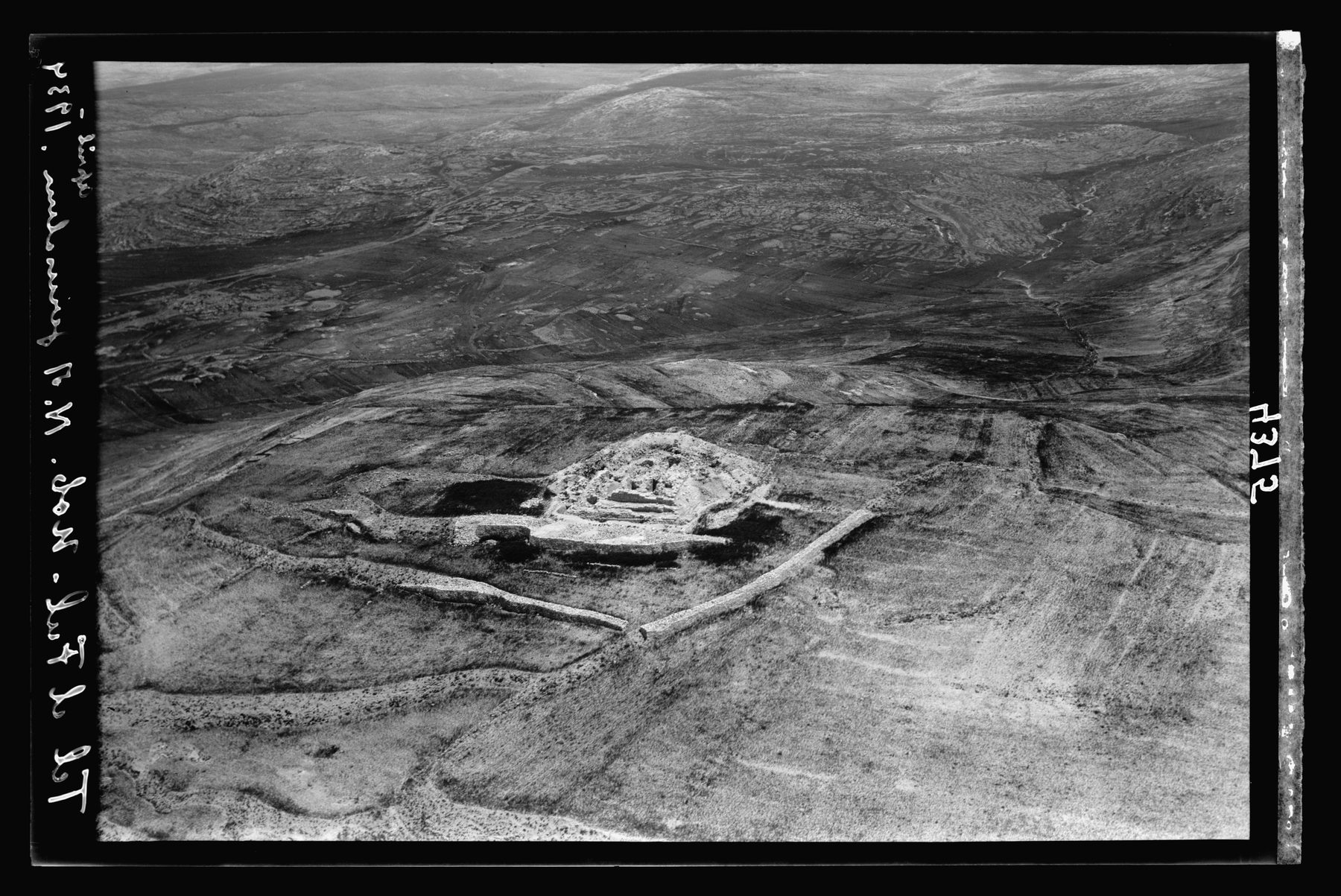
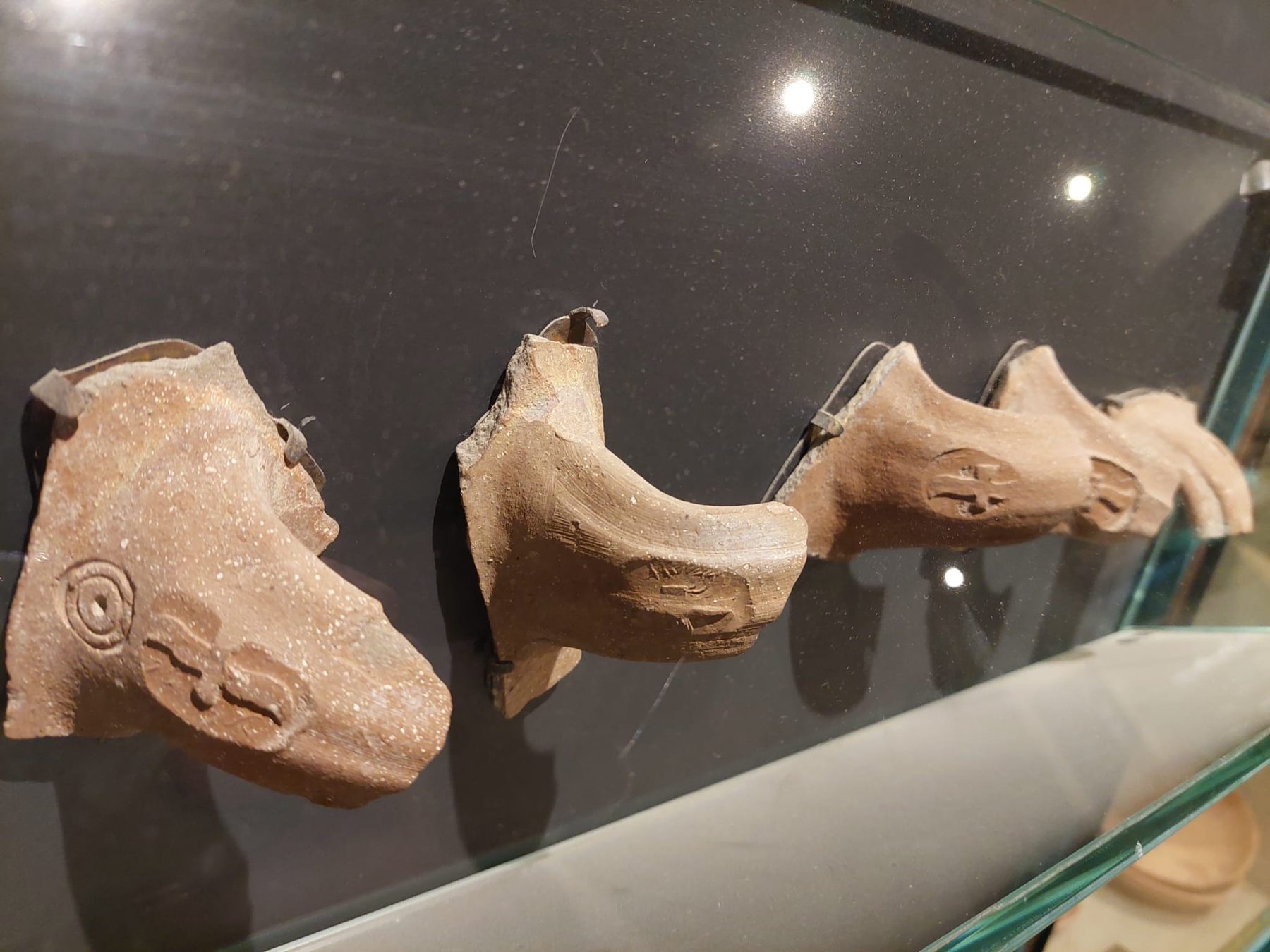
The complaint is ordinary. A man reaping in a field finishes his quota for the day, same as always, same as the men working alongside him. An overseer takes his garment anyway and does not give it back. So the reaper does what a man with no other leverage does: he writes to the person above the overseer. The letter survives, scratched onto a piece of broken pottery and buried at a small fortress on the Mediterranean coast for roughly twenty-six centuries, until it was dug up in 1960.
Nothing about the ostracon is grand. It is a sherd, a petition, a single ordinary grievance from a field on the edge of the kingdom of Judah. That is exactly why it matters. Most surviving inscriptions from the biblical world are royal, priestly or monumental - the record of kings and conquests. This one is the record of a working man asking a state official to make the law apply to him. It is one of the clearest pieces of physical evidence that ordinary people in late First Temple Judah could read, write and expect the machinery of justice to answer them.

What the letter says
The text is a formal petition addressed to "my lord the governor" (or officer - the Hebrew title is a general one for a superior with authority). The petitioner identifies himself as "your servant," describes his work reaping and gathering grain alongside other labourers, and states that he completed his quota before an overseer took his garment. He asks the governor to intervene and have it returned, and appeals to witnesses among his fellow reapers who can confirm his account. The petitioner's own name is lost where the sherd is broken - we know his grievance, his labour and his argument, but not who he was.
The letter is written in confident, formulaic Hebrew prose, the kind that assumes both writer and reader understand legal convention: a stated grievance, a claim of witnesses, a request for a specific remedy. Whether the reaper wrote it himself or dictated it to a scribe at the fortress is debated and cannot be settled from the sherd alone. Either way, the letter demonstrates that a legal register of written Hebrew, with its own vocabulary for petition and testimony, was in working use at a minor coastal garrison, not only in Jerusalem.
The Metzad Hashavyahu Ostracon
A pottery sherd inscribed in Hebrew with a petition from an unnamed harvester to a governor, requesting the return of a garment seized by an overseer. Found in 1960 during excavation of the fortress of Metzad Hashavyahu on the Israeli coast south of Jaffa, and published soon after by the Israeli epigrapher Joseph Naveh. Dated on palaeographic and stratigraphic grounds to the late seventh century BCE, within the reign of Josiah of Judah. Held at the Israel Museum, Jerusalem.
Israel Museum, JerusalemThe law behind the complaint
The letter is not simply venting. It is invoking a specific, known legal protection. Both Exodus and Deuteronomy set out rules for a creditor who takes a poor man's cloak as a pledge: it must be returned to him by sundown, because it is the garment he sleeps in. Exodus puts it starkly - if the poor man cries out, "I will hear, for I am compassionate" (Exodus 22:26-27). Deuteronomy repeats the principle and adds that the creditor may not even enter the debtor's house to seize the pledge himself, but must wait outside for it to be brought to him (Deuteronomy 24:10-13). The Metzad Hashavyahu petition does not quote either passage. It does not need to. The reaper's argument - that the garment was taken and not given back, and that this is a wrong the authorities are obliged to correct - only makes sense against a shared legal expectation matching the one these laws describe.
That is the evidential weight of the ostracon. It is not proof that the Torah as we have it existed in fixed written form in the seventh century BCE. It is proof that a legal norm about garments, pledges and the vulnerability of a poor labourer's night-clothes was alive enough, in a working population on the coast, that a reaper could appeal to it in a formal complaint and expect a governor to recognise the claim. Law of this kind was not confined to priestly circles or royal courts. It reached a field worker at a minor garrison and gave him a route to redress.
Josiah's Judah reaches the coast
The fortress itself carries a second layer of evidence. Metzad Hashavyahu sits on the coastal plain, outside the traditional hill-country core of Judah, in an area where Judean control is not automatically assumed for this period. A Hebrew-literate garrison population, keeping Hebrew administrative and legal correspondence, at a small coastal post in the late seventh century BCE, is itself evidence for the reach of the Judean state - commonly associated with the reign of Josiah - into the coastal strip during those decades, whether through direct rule, garrisoning or close alliance. The ostracon is not a royal inscription boasting of that reach. It is a byproduct of it: ordinary paperwork generated because the apparatus of Judean law and literacy had, in fact, arrived there.
The pledge-garment laws
Two passages in the Torah require that a garment taken as a pledge from a poor man be returned to him before nightfall, since it is what he sleeps in, and forbid the creditor from entering the debtor's house to seize it. Exodus frames the obligation as a matter that � - ׳ will personally hear and answer if ignored. Deuteronomy adds the further protection that the pledge must be brought out to the creditor, not taken by force from inside the home. Neither passage is quoted on the Metzad Hashavyahu ostracon, but the reaper's petition assumes a matching principle: a seized garment is a wrong that the authorities are bound to correct.
Hebrew Bible, Exodus and DeuteronomyThe petitioner's name did not survive the break in the sherd, and nothing is gained by inventing one. What survives is enough: a working man's confidence that a written complaint, correctly framed, would be read and acted on. Whoever he was, he expected the law to know his case even if we never will know his name.
Further reading
Story & Stone · The Tribe in Objects
See it in action: The Words That Outlasted Everything - ��