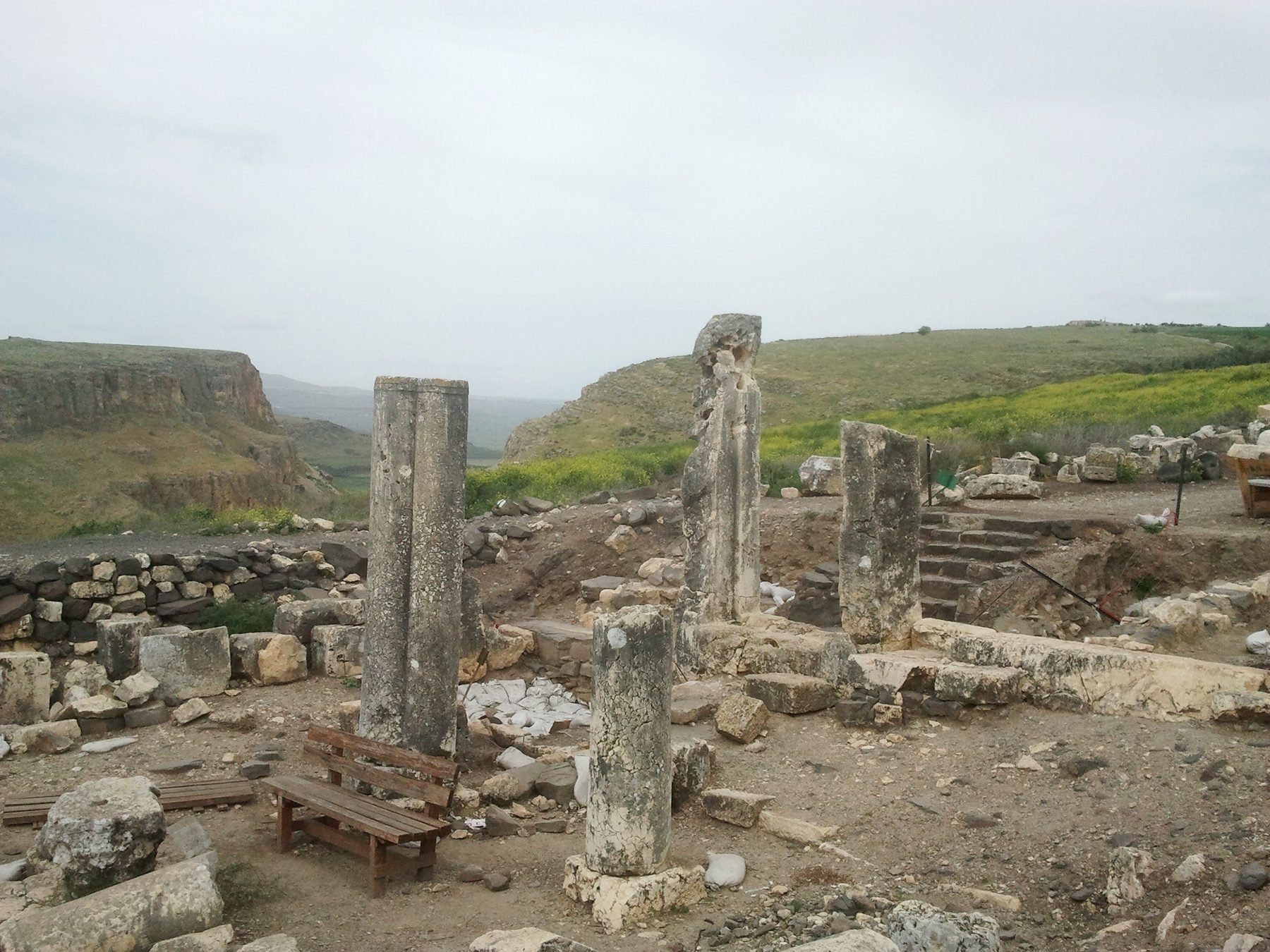
In 2011 archaeologists opened a trench on a low hillside above the Sea of Galilee, at a site called Huqoq, and began finding the floor of a synagogue that had gone unnoticed for some fifteen hundred years. What came up out of the soil was not the plain geometric paving common at most ancient synagogue sites. It was a mosaic pavement worked in dense, narrative panels: human figures, animals, Hebrew and Greek lettering, a whole programme of scenes laid in coloured stone tesserae across the floor of the building. Over eleven seasons the excavation concluded in 2023. What came out of the ground is enough to make Huqoq one of the more consequential Jewish archaeological finds of recent decades.
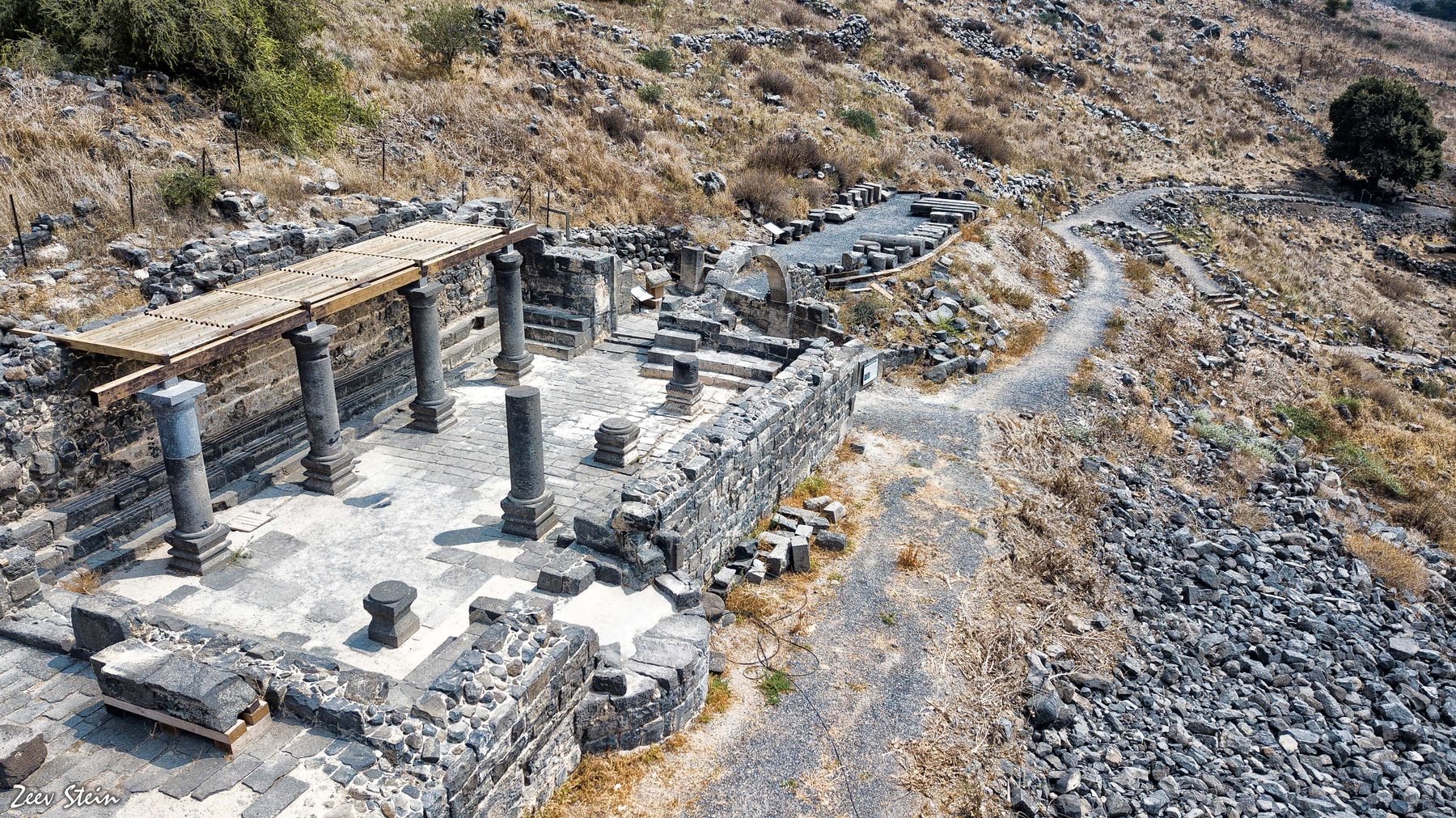
The site is unglamorous to describe and startling to see. A village called Huqoq is named among the towns of the tribe of Naphtali in the Book of Joshua, and a village of that name has stood in the same part of the eastern Galilee, on and off, into the modern era. The excavation, led by a team from the University of North Carolina at Chapel Hill working with an international field school, has been digging beneath and around the modern village since 2011, and has uncovered a monumental synagogue building that went through more than one phase of use in late antiquity. The mosaic floor belongs to the building's most elaborate phase, generally placed in the fifth century CE, a period when Jewish communities across the Galilee were building substantial, decorated synagogues even as the empire around them was Christianising.

What the floor shows
The panels uncovered so far read like a picture-book of biblical and post-biblical story, laid out in registers across the nave and aisles. One sequence shows scenes from the life of Samson: the strongman carrying the gate of Gaza on his shoulders, and elsewhere a scene that matches the account of Samson sending foxes with torches tied to their tails into the Philistines' fields. Another panel shows two men carrying a huge cluster of grapes slung from a pole between them, the scene the Torah recounts of the spies sent into Canaan returning with fruit of the land. Elsewhere the excavators found a large battle scene with soldiers, war elephants and a bull, worked in fine detail across a wide panel; it does not illustrate a passage from the Hebrew Bible, and the excavation team has proposed it may depict a legendary meeting between a Judaean high priest and a Greek ruler, a story preserved outside the biblical canon rather than inside it. A separate panel shows a figure being swallowed in succession by three different fish, read as an unusually literal telling of the Jonah story. Non-narrative elements found on the floor include a dedicatory inscription and a band bearing a personification associated with the months and seasons, the kind of classical decorative vocabulary that shows up in other Galilean synagogue floors of the period.
Taken together, the panels are unusual less for any single scene than for their range. Most surviving synagogue mosaics of the era favour a fairly narrow repertoire: geometric carpets, a zodiac wheel with a Helios figure at the centre, the Binding of Isaac, the Ark of the Covenant flanked by menorahs. Huqoq has some of that shared vocabulary too, but it goes well beyond it, into scenes that are not attested on any other known synagogue floor from the period. That breadth is what has kept the site in active excavation and active publication for over a decade.
The dig
Excavation at Huqoq, in the eastern Galilee near the Sea of Galilee, took place from 2011 to 2023 under a team from the University of North Carolina at Chapel Hill, working with an international field school of students and specialists. The dig uncovered a monumental late-antique synagogue building with more than one construction phase, and beneath its later floor the mosaic pavement that has since drawn sustained scholarly and press attention. Conservation and research on the excavated materials continue under the supervision of the Albright Institute.
University of North Carolina at Chapel Hill excavation, Huqoq, IsraelWhy it matters as evidence
A mosaic floor is a hard thing to fake and a harder thing to misdate. It sits in a stratified archaeological context, laid down in one building phase and sealed by the layers above it, so its date rests on the same kind of physical evidence archaeologists use everywhere: pottery, coins and the building sequence around it, not on a text's own say-so. That makes Huqoq's floor a check on the written record rather than a mere illustration of it. It shows a Jewish community in fifth-century Galilee wealthy and confident enough to commission a large figurative pavement, comfortable using Greek artistic conventions and Greek language alongside Hebrew, and willing to put non-biblical legend on the floor of its house of worship next to scenes straight out of the Torah. None of that had to be true. Rabbinic sources of the period debate figurative art in religious settings, and easy assumptions about a strictly aniconic ancient Judaism have had to bend in the face of floors like this one, at Huqoq and at other Galilean sites. The stone does not argue. It simply sits there, uncovered, and settles the question of what once stood on the ground.
The scale of the discovery is also a reminder of how much of this evidence is still underground. Huqoq is not a site excavated once, in the nineteenth century, and filed away. Over its eleven seasons of active excavation ending in 2023, the team uncovered a floor whose full extent was not exhausted. Scholarly and archaeological work on the mosaics continues, and the picture of late-antique Galilean Jewish life has been substantially redrawn by what came out of the ground.
The pavement
The excavated mosaic floor belongs to the synagogue's later, more elaborate building phase, generally dated to the fifth century CE. Panels published to date include scenes from the story of Samson, a pair of figures carrying a cluster of grapes, a large battle scene with soldiers and elephants, a Jonah scene, a dedicatory inscription and decorative bands. The floor remains in situ at the excavation, with conserved sections studied and periodically displayed by the excavating team.
Huqoq synagogue floor, in situ, GalileeFurther reading