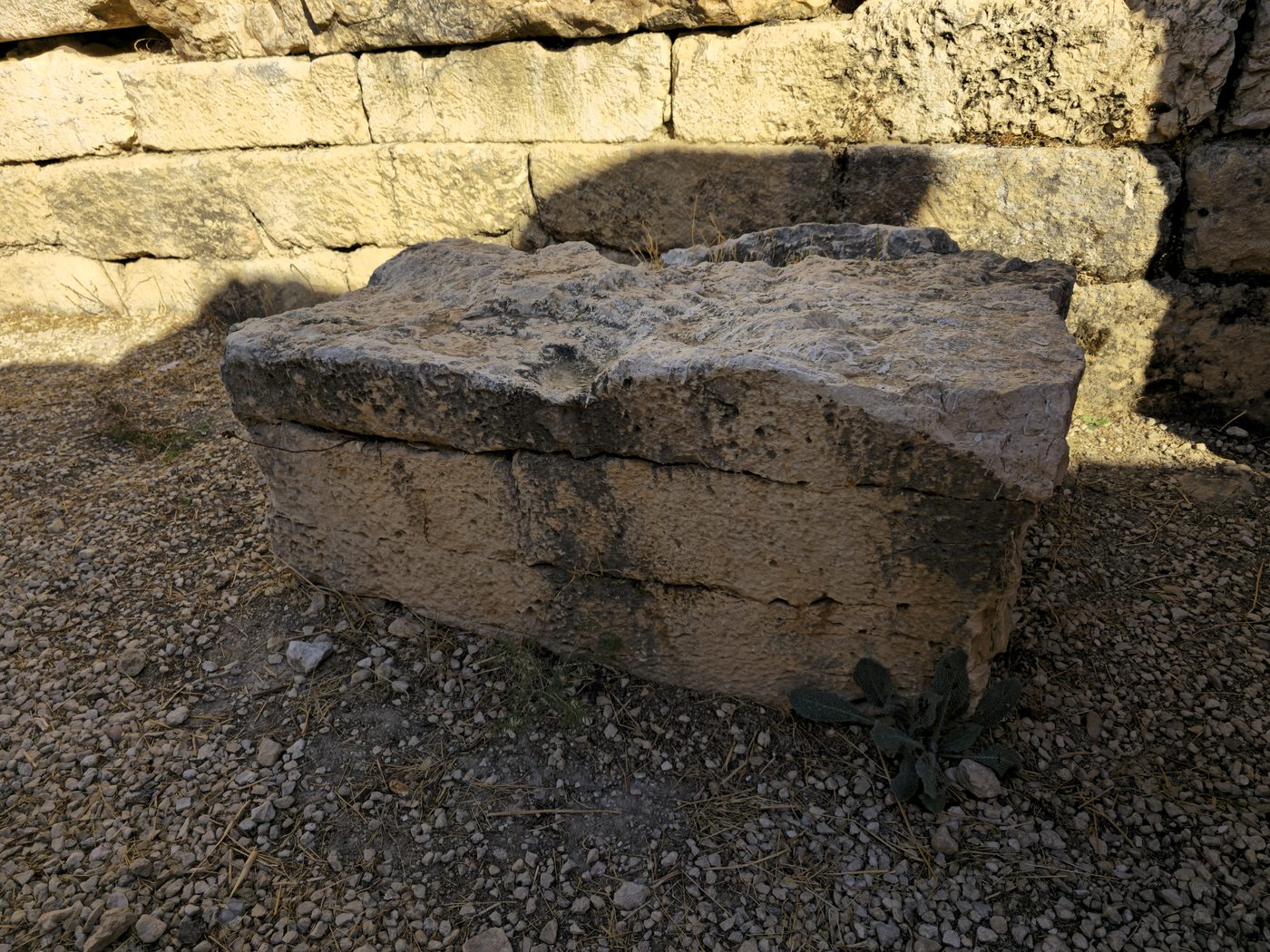
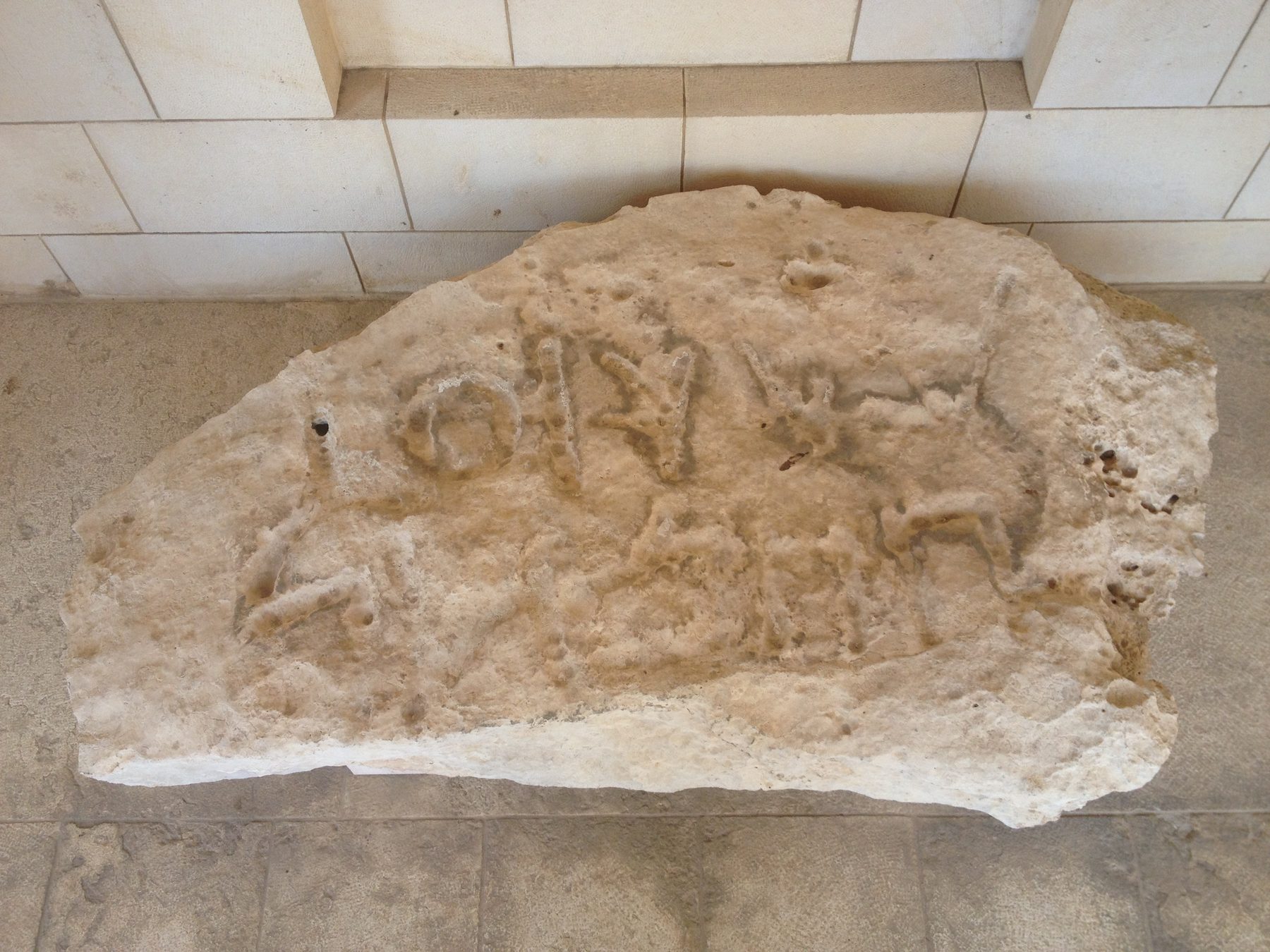
Most of what the tribe remembers about the Seleucid Greeks comes from the tribe's own books - the Books of Maccabees, written by the winning side about a war for the Temple. It is rare to find the other side's paperwork. Broken slabs of inscribed stone, cut in formal Greek and issued in the name of a Seleucid king, do exactly that. They are administrative correspondence, not scripture, and they happen to name a man the Jewish tradition remembers as a villain sent to rob God's house.
The stele is not a single intact slab but a set of fragments, inscribed with a Greek text recording a royal letter and the correspondence it generated as it moved down the Seleucid chain of command. The topic is administrative: the king is appointing an official to oversee sanctuaries across a province that included Judea, and the letter is addressed to his chief minister. That minister's name is Heliodorus - the same name that appears in the third chapter of 2 Maccabees, sent by his king to seize the treasury of the Jerusalem Temple and turned back, in the story, by a terrifying vision at the treasury door.

What the stone says
The surviving text is a chain of documents rather than a single announcement. A royal letter from the king sets out the appointment of an overseer responsible for the sanctuaries of the province called Coele-Syria and Phoenicia, which included Judea and Jerusalem among the territories under its remit. Below the king's letter, the stone preserves the cover note that carried the order onward through the ranks - the ordinary machinery of a bureaucratic empire, filed and displayed rather than destroyed. Nothing in the surviving text mentions Jerusalem, the Temple or the Jews by name; the interest for readers of the Jewish story lies entirely in who receives the king's letter.
That recipient is Heliodorus, addressed as the king's chief minister, the official to whom provincial matters of this kind were referred. Until the stele came to light, Heliodorus was known chiefly as a character in 2 Maccabees - a figure who could, in principle, have been invented or exaggerated for the story's purposes. The stele removes that possibility. It shows a real Heliodorus, holding real authority, in exactly the administrative role the Jewish text assumes he held.
The Heliodorus stele
A Greek inscription preserving a royal letter of Seleucus IV and the correspondence it generated, appointing an overseer of the sanctuaries in the province of Coele-Syria and Phoenicia and addressed to the king's minister Heliodorus. The text is administrative rather than narrative: no drama, no vision, no miracle - just an empire managing its temples and its tax base. It is precisely that ordinariness that makes it useful.
Israel Museum, JerusalemWhy it matters as evidence
2 Maccabees tells its Heliodorus story as a story - a wicked errand, a divine rescue, a chastened enemy who leaves testifying to the God of Israel. Read on its own, that account sits in the story register: proud, dramatic, told to be believed rather than checked. The stele does something different. It does not confirm the vision at the treasury door - no inscription could - but it confirms the frame the story is built on: a real Seleucid minister named Heliodorus, operating with real authority over sanctuary affairs in the province that held Jerusalem, at the right moment in the right reign. Legend turns out to have borrowed its villain from the filing cabinet.
That is a modest claim, and it is exactly the kind of claim stone is good for. The inscription does not tell us whether the Temple treasury was actually threatened. What it establishes is narrower and more solid: the Jewish account was not inventing its antagonist out of nothing. It was writing about a functioning part of the Seleucid state, correctly named and correctly placed.
The Book of Maccabees told its own story about Heliodorus and did not need an inscription to be believed. The inscription confirms it was telling the story about a real man.
Found near Maresha, reused as building stone
Fragments of the inscription were identified in the Judean lowlands in the area of ancient Maresha, near modern Beit Guvrin, where sections of the inscribed stone had been reused in later construction. The pieces were subsequently matched, published and brought together for display, joining a fragment already known from elsewhere. The stele's find context is a builder's wall centuries after the decree was cut - evidence surviving by accident, which is how most of it survives.
Israel Museum, JerusalemWhat stays in the glass case
The Heliodorus stele will never carry the weight the Books of Maccabees carry in the story register - it has no miracle in it, and it was never meant to be read as anything but a filing note. That is its value. It sits quietly behind glass in Jerusalem, naming an official in an empire's own hand, and lets a story the tribe has told with pride for over two thousand years rest, at one specific point, on stone as well as memory.
Further reading