Tell el-Ful is a modest hill on the northern approach to Jerusalem, and it is easy to drive past without noticing it. What survives on top of it is not modest: the footing of a corner tower and casemate wall, cut and built into the bedrock, belonging to a small fortress of the early Iron Age. Excavators identified the hill with Gibeah, the "hill" of the tribe of Benjamin named in the Bible as the home town and stronghold of Saul, Israel's first king. The masonry does not announce itself as royal. It announces itself as defensible - a plain, functional fort on a commanding ridge, exactly what a chieftain consolidating a new and precarious kingship would need.
What makes Tell el-Ful worth a visit rather than a footnote is that you can still stand inside the fortress plan. The corner of the tower is not a drawing in an excavation report; it is stone you can put your hand on, on the hill it has always occupied. Very few sites connected with the earliest Israelite monarchy offer that.

What was found, and when
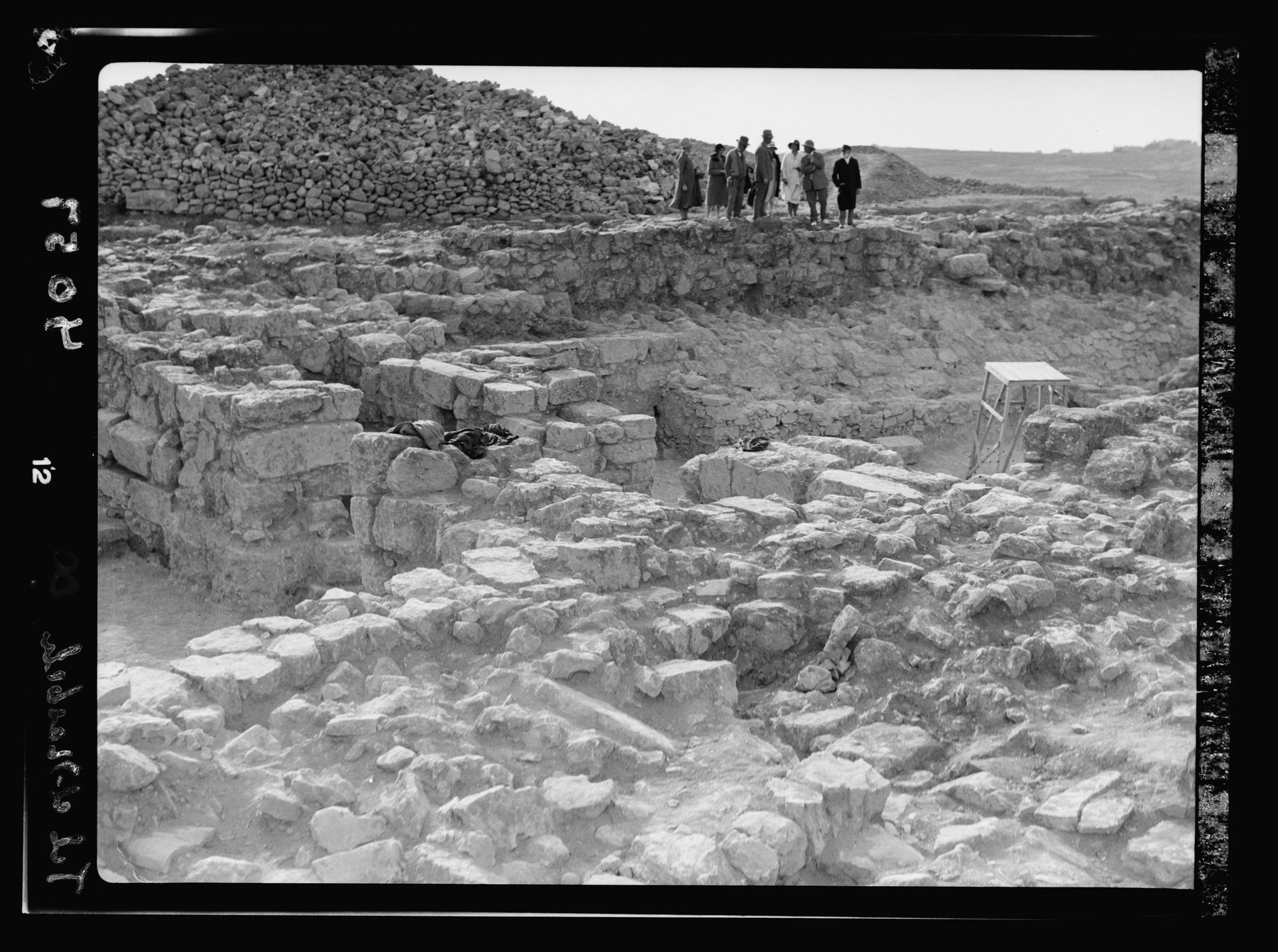
Tell el-Ful was excavated in the 1920s and 1930s by William Foxwell Albright, who proposed the identification with Gibeah on the strength of the site's location - it sits where the biblical narrative places Saul's town, on the main ridge road a short walk north of Jerusalem - and on the pottery and fortification remains he uncovered. A further season of excavation followed in the 1960s under Paul Lapp, refining the sequence of building phases on the hill. The earliest fortress belongs to the early Iron Age, the period the Bible assigns to Saul's reign; a later, more substantial fortification was built on the same spot, probably in the following centuries, and the hill was reused again in the Hellenistic and Byzantine periods.
The identification of Tell el-Ful with Gibeah is not settled beyond dispute, but it has held up as the leading candidate for close to a century. No other site on the relevant stretch of the Benjamin ridge combines the topography, the road position and the Iron Age fortress remains as well as this one does.
Excavating the fortress
Two campaigns of excavation, decades apart, exposed a sequence of fortifications on the summit of Tell el-Ful. The earliest belongs to the early Iron Age - the period of the Israelite settlement and the beginnings of the monarchy - and consists of a casemate wall with a corner tower, built directly on the bedrock. A larger, more heavily built fortress was constructed over it later. The site was then identified, on grounds of location and remains together, as the Gibeah named in the biblical account of Saul.
Tell el-Ful, north of JerusalemWhat it says, and what it argues
A fortress like this does not carry an inscription naming its builder. What it shows is a type: a modest, functional stronghold on a strategic height at the very moment the Bible places the birth of Israelite kingship in that district. It corroborates the setting rather than the man - it demonstrates that someone with the means to organise labour and stone was fortifying this ridge in the right period, which is exactly the kind of evidence a claim about an early monarchy needs and rarely gets. A story can survive without stone. A stone fort that sits where the story says it should, built when the story says it was built, is a different order of support.
The scholarly debate here runs along two lines. One concerns dating: fixing the early Iron Age building phases precisely enough to say with confidence that they belong to Saul's own lifetime, rather than to the generation just before or after him, is difficult with the pottery and architectural evidence alone. The other concerns the identification itself - whether Tell el-Ful is certainly Gibeah, or simply the best match among a small set of candidates on the same ridge. Neither question overturns the basic picture: an early Israelite hill fortress, in the right place, in the right period, doing the kind of work a first king's stronghold would have done.
Visiting the hill
Tell el-Ful stands within the built-up area on the northern edge of Jerusalem, its summit still open ground. The excavated fortress corner is exposed on site, alongside the unfinished shell of a twentieth-century palace project abandoned on the same hilltop - two failed and half-failed seats of power sharing one small summit, three thousand years apart. No fee, no case, no glass: the evidence stays exactly where it was dug up.
In situ, Tell el-FulFurther reading